

Blog


PCO 1810 to PCO 1881 Transition: Preform Mould Adaptation | DEBODI mould
Learn how to adapt PET preform moulds from PCO 1810 to the lightweight PCO 1881 standard. Discover tooling modifications and core alignment tactics by DEBODI mould.


In the global beverage and bottling industry, the drive toward sustainability and operational cost reduction has triggered a widespread migration from legacy packaging standards to lightweight configurations. The most significant shift in carbonated soft drink (CSD) and bottled liquid packaging over the past two decades is the transition from the legacy PCO 1810 finish to the short-neck PCO 1881 standard.
While this change yields massive raw material savings across millions of production cycles, it poses structural and engineering challenges for plastic injection operations. Converting an existing production line or building new tooling requires deep expertise in mould architecture.
As a premier Chinese PET preform mould factory, DEBODI mould specializes in high-cavitation tooling and neck finish conversions. This comprehensive technical guide outlines how preform moulds adapt to the PCO 1881 cap standard and how to manage the conversion process seamlessly.
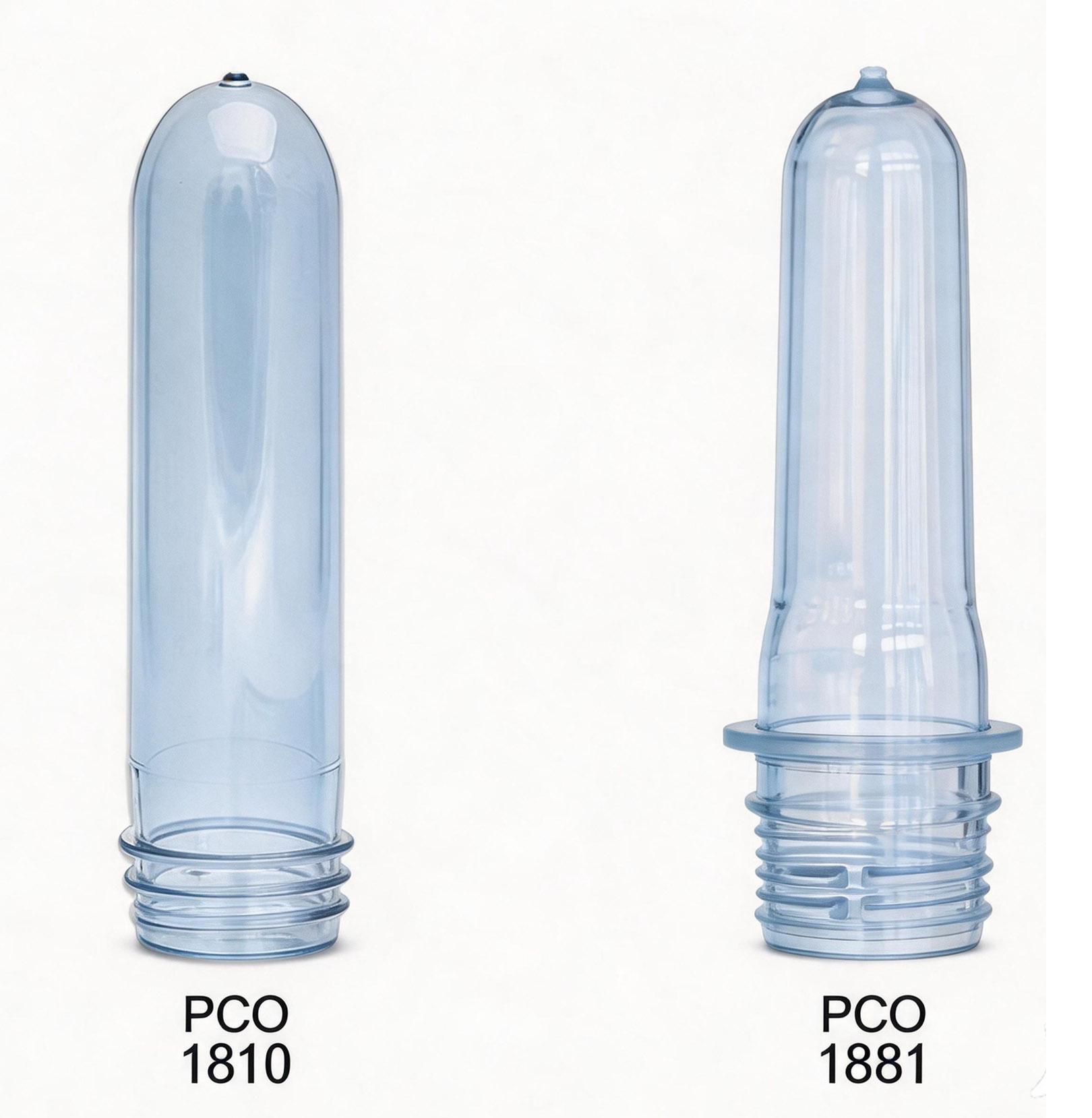
Part 1: Structural Comparison — PCO 1810 vs. PCO 1881
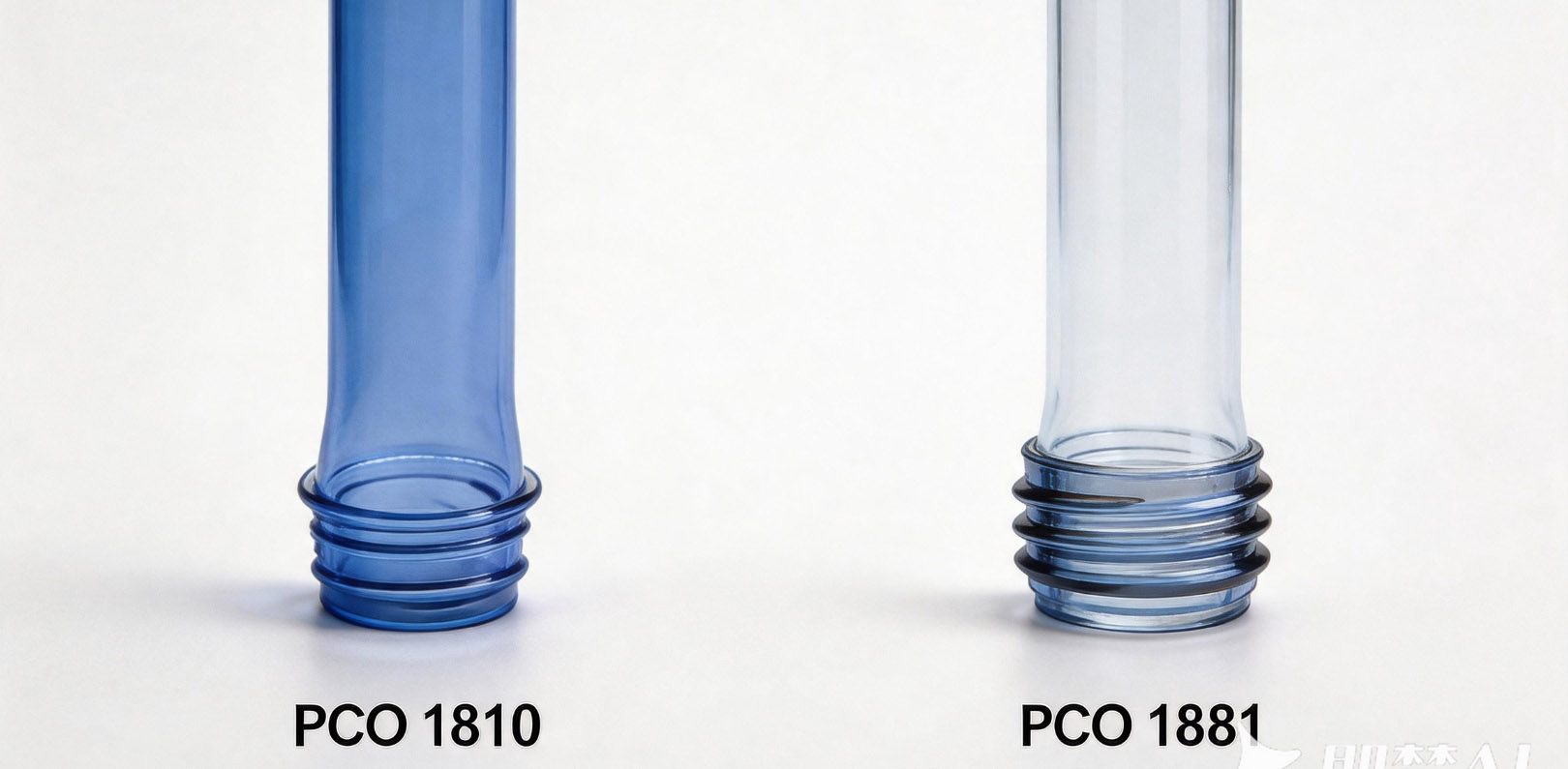
Understanding the geometrical divergence between these two standards is critical for toolmakers and beverage manufacturers alike. The PCO 1881 standard is explicitly engineered to minimize the mass of the neck finish, reducing both PET resin consumption and the weight of the accompanying plastic cap.
| Dimensional Parameter | Legacy PCO 1810 Standard | Lightweight PCO 1881 Standard | Tooling Modification Impact |
|---|---|---|---|
| Total Finish Height | 21.00 mm | 17.00 mm | Requires reduction of 4.00 mm in stack height. |
| Thread Pitch | 3.18 mm | 2.70 mm | Requires precision CNC re-grouting or new neck rings. |
| Thread Rotation | 650 degrees (single start) | 360 degrees (optimized) | Reduces cap application torque and cycle times. |
| Resin Weight Saving | ~5.0 to 5.5 grams (average) | ~3.5 to 3.8 grams (average) | Yields approximately 1.3 to 1.7 grams saved per preform. |
The reduction of 4.00 mm in total height represents a major material saving. For an industrial bottling facility running at a scale of 100 million bottles annually, a saving of 1.5 grams per preform equates to 150 metric tons of PET resin saved per year, drastically cutting down overhead costs and carbon footprint.
Part 2: Core Engineering Steps for Preform Mould Adaptation
Converting a high-cavitation preform mould from PCO 1810 to PCO 1881—or engineering a new mould to run on automated lines—involves complex modifications to the injection stack. It is not merely a matter of altering the thread profiles.
1. Re-engineering and Replacing the Neck Rings
The neck ring controls the external thread profile, tamper-evident band, and support ledge of the preform. Because the thread pitch shifts from 3.18 mm to 2.70 mm, existing PCO 1810 neck rings cannot be remachined.
DEBODI mould manufactures brand-new replacement neck rings utilizing premium imported FS136 or stainless steel tool steels, hardened to 50–52 HRC. This ensures that the intricate 360-degree thread profiles resist the abrasive wear of high-velocity resin injection.
2. Adjusting the Core Pin Stack and Lock Interlocks
Because the finish height drops by 4.00 mm, the relative position between the core pin tip and the cavity gate must be re-evaluated. If you are modifying an existing mould base, the core split-line must be shifted up, or the taper lock dimensions must be shimmed and re-ground to maintain perfect concentricity. Any deviation in core-to-cavity alignment will cause wall-thickness variation, leading to catastrophic blow-out failures during blow moulding.
3. Venting System Optimization for the Short Neck
The PCO 1881 finish compresses the gas venting channels because of its shorter height. During high-speed injection filling, trapped air in the neck region must escape rapidly to prevent "burning" (diesel effect) or incomplete thread filling. DEBODI engineers optimize the venting slit geometry in the neck rings, adjusting depths to 0.015 mm—allowing air to escape while preventing any flash formation on the PET material.
4. Hot Runner Nozzle Realignment
While the internal volume and length of the preform body may remain unchanged during a lightweighting retrofitting process, the total stack length compression means the hot runner tip penetration depth must be carefully calibrated. Valve-gate pins must be adjusted to ensure they stroke perfectly into the updated cavity gate inserts, achieving a clean, flush vestige without tailing.
Part 3: Overcoming Operational Challenges Post-Conversion
Adapting your injection tooling is only half the battle; the new preforms must integrate flawlessly into downstream production. Transitioning to PCO 1881 requires careful consideration of the following parameters:
- Support Flange Handling: The support ledge diameter and thickness change slightly under PCO 1881 rules. Conveyor air tracks, feed rails, and blow moulder sorting wheels must be adjusted to prevent the preforms from jamming or tilting.
- Cooling Dynamics: Because the PCO 1881 neck profile has less plastic volume, it cools faster than PCO 1810. However, because it is closer to the hot runner manifold split line, independent neck-ring cooling water loops must be strictly regulated to avoid thermal crystalline hazing in the thread area.
Partner with DEBODI mould for Flawless Tooling Transitions
Transitioning from PCO 1810 to PCO 1881 is an essential move for packaging manufacturers looking to remain competitive and meet modern eco-friendly directives. Navigating this shift requires a manufacturing partner with deep metallurgical knowledge, precision grinding capabilities, and extensive hot-runner experience.
As a professional PET preform mould factory in China, DEBODI mould offers both comprehensive conversion services for your existing tools and world-class engineering for new 16 to 128-cavity PCO 1881 injection moulds. We ensure maximum material savings with zero compromise on mechanical performance.
Contact the engineering desk at DEBODI mould today to accelerate your packaging lightweighting transition.
Tags
About the author

Peter Du
Content ManagerContact our PET preform mold specialists today and get customized solutions for your bottle packaging production needs.
Behind every successful mold project is a dedicated DEBODI team committed to quality, precision, and long-term customer support.