

Blog


Advanced Labyrinth Cooling Systems in Multi-Cavity PET Preform Molds
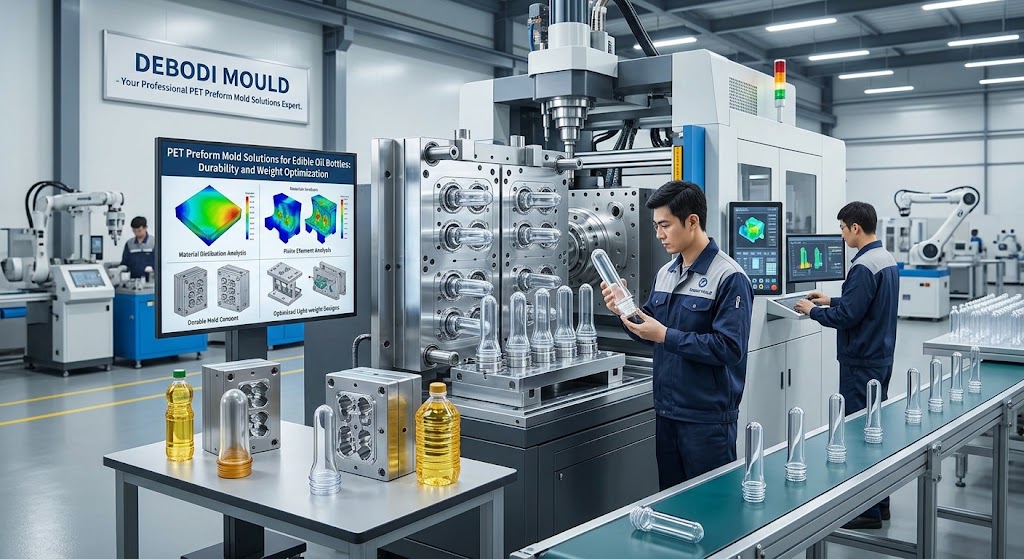
Debodi Mould — professional PET preform mold solution expert. Deep technical analysis of advanced labyrinth cooling systems in multi-cavity PET preform molds for cycle time reduction and quality


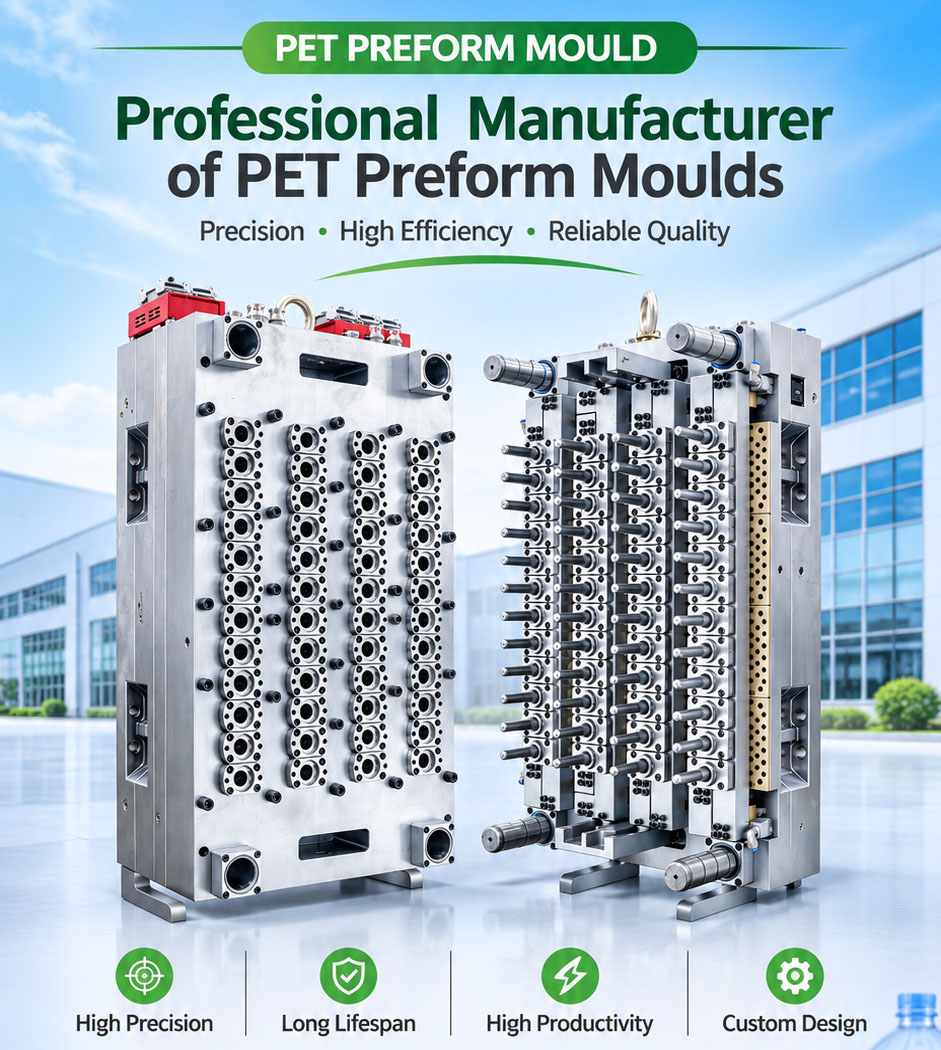
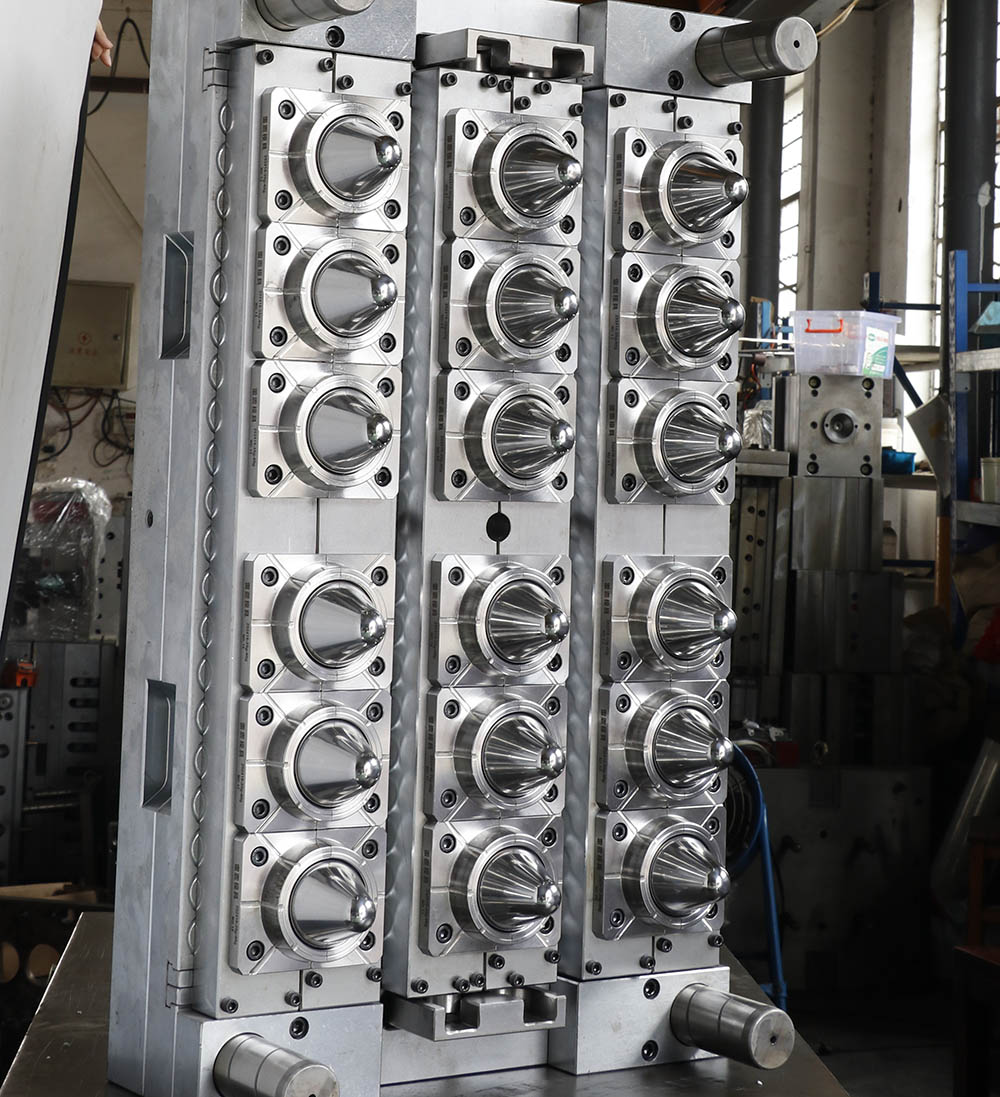
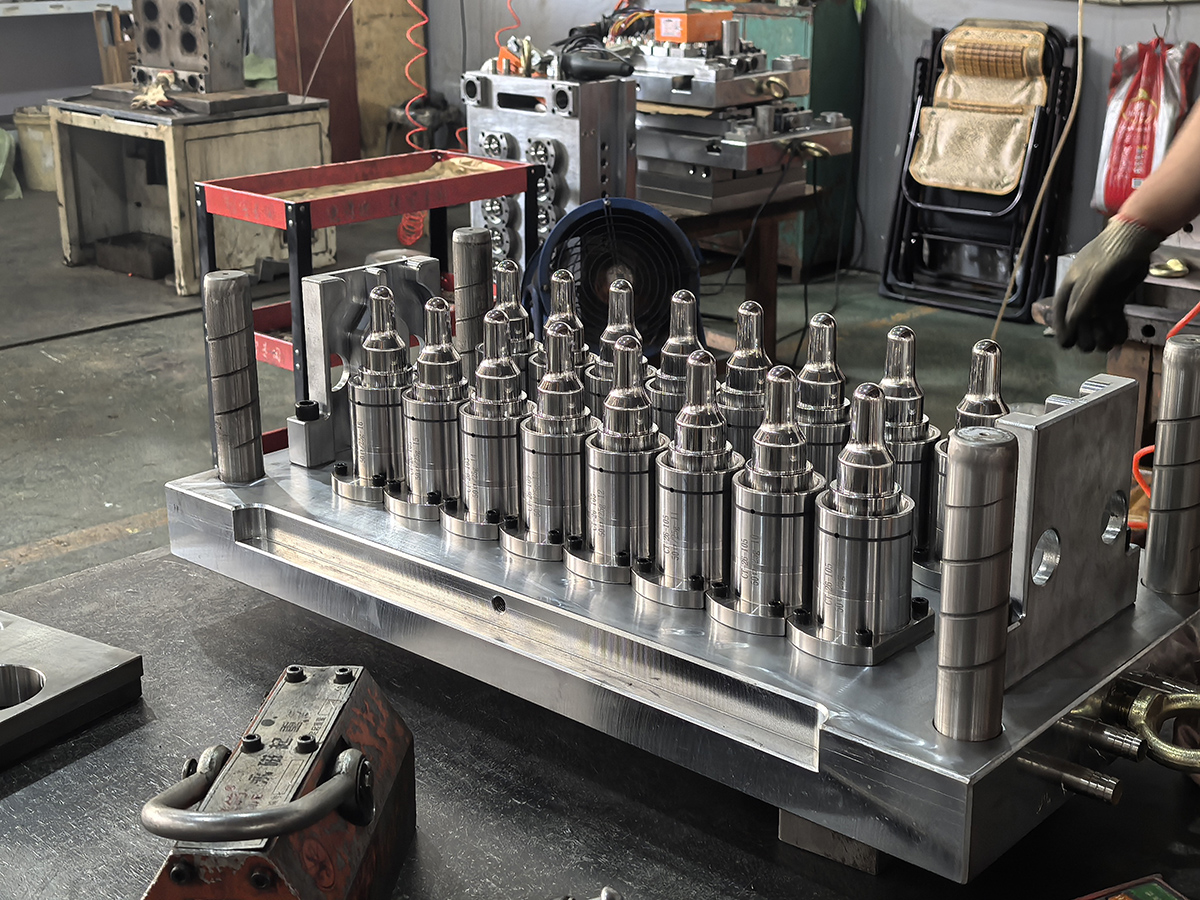
In PET preform injection molding, cooling is not a peripheral concern — it is the single most decisive factor governing cycle time, dimensional accuracy, and energy consumption. The injected preform must cool sufficiently to maintain its molded dimensions before ejection, yet excessive cooling time directly erodes production throughput and increases specific energy consumption per part. For manufacturers of preforms destined for beverage, pharmaceutical, and food applications, the cooling system inside a multi-cavity mold represents the difference between marginal profitability and competitive advantage. At Debodi Mould, we engineer every preform mold with cooling architecture treated as a first-class design discipline. This article examines advanced labyrinth cooling systems — a configuration that achieves superior heat extraction through extended coolant residence and optimized flow dynamics — and explains why this matters for multi-cavity PET preform production. Multi-cavity preform molds (ranging from 1 to 96 cavities in our production capabilities) present cooling challenges that single-cavity tools do not. Heat accumulation becomes spatially uneven, gate areas demand disproportionately aggressive cooling due to proximity to the hot runner nozzle, and the neck finish — with its greater wall thickness — retains heat longer than the body. A conventional straight-drilled cooling channel often fails to achieve uniform temperature distribution across all cavities. The result is predictable: bottom cavities may receive better cooling than top cavities, leading to inconsistent preform quality, dimensional variation, and higher rejection rates. Resolving this requires a cooling architecture that compensates for hydraulic imbalances while maximizing heat transfer surface contact. The term labyrinth denotes a cooling channel configuration in which the coolant path is deliberately elongated and redirected through a series of connected channel parts, reversing flow direction between adjacent sections. Unlike a straight-through conduit, a labyrinth arrangement increases both the effective surface area of coolant contact and the residence time of the cooling medium within the mold block. In the context of PET preform molds, this principle can be applied at multiple levels: The result of a well-designed labyrinth system is not merely faster cooling — it is more uniform cooling. And uniformity is what separates a mold that runs well for one million cycles from one that generates scrap at the two-million mark. A labyrinth channel that weaves through the mold block increases the total wall area available for convective heat transfer. For a fixed coolant flow rate, this translates to greater total heat removal — or, alternatively, the same heat removal at a lower flow rate and reduced pump energy consumption. The hydraulic resistance of a well-designed labyrinth can be tuned to balance coolant distribution across cavities. In practice, this means the path length from supply to return can be equalized across all cavities, preventing the "top vs. bottom" cooling disparity that plagues unbalanced conventional layouts. This is not merely a theoretical advantage — it directly affects wall thickness tolerance, which in PET preforms can make or break blow-molding performance downstream. Labyrinth channels, by virtue of their directional changes, promote turbulent flow at lower Reynolds numbers than straight channels. Turbulence disrupts the thermal boundary layer at the channel wall, significantly increasing the convective heat transfer coefficient. For PET, which requires rapid cooling to remain amorphous and transparent, this is critical. Advanced preform designs increasingly demand differentiated cooling — not uniform cooling. The neck finish may need to remain semi-crystalline for hot-fill stability, while the body must remain amorphous for blow-molding clarity. This requires thermal isolation between regions and independent cooling circuits for the body mold, neck finish mold, and core. A labyrinth cooling system, with its capacity for independent zone control and precise flow balancing, is uniquely suited to this task. By integrating low-thermal-conductivity inserts at the interfaces between zones, we prevent heat migration and maintain the thermal boundaries that differentiate preform properties. As a PET preform mold manufacturer serving customers across North America, Europe, South America, the Middle East, Southeast Asia, and Africa, we have developed cooling design protocols that address the full spectrum of production requirements. The commercial case for advanced labyrinth cooling rests on measurable outcomes: For a 48-cavity preform mold running at 15-second cycles, even a 10% cycle time reduction translates to hundreds of thousands of additional preforms annually. The cooling system, not the injection unit, determines whether that potential is realized. PET preform manufacturing is a volume business with narrow margins. The mold is the production asset, and its cooling system is the leverage point for productivity. Advanced labyrinth cooling represents a deliberate departure from commodity mold design — an investment in thermal engineering that pays returns through every cycle, every cavity, every shift. At Debodi Mould, we build preform molds as thermal systems first, mechanical assemblies second. That perspective, combined with rigorous simulation, precision manufacturing, and one-trial validation, is why our customers trust us with their highest-cavitation, highest-throughput preform projects. Debodi Mould delivers multi-cavity PET preform molds engineered for cycle time, dimensional consistency, and long-run reliability. Contact our engineering team to discuss your next preform project.The Engineering Challenge: Cooling in High-Cavity Preform Molds
What Constitutes a "Labyrinth" Cooling System?
Why Labyrinth Architecture Outperforms Conventional Channeling
Extended Heat Transfer Surface
Improved Flow Distribution in High-Cavity Tools
Turbulence Promotion
Case Context: Thermal Isolation in Modern Preform Design
Debodi Mould's Approach to Cooling System Engineering
Practical Outcomes for Preform Manufacturers
Conclusion: Cooling as Competitive Advantage
Looking for a Professional PET Preform Mold Partner?
Tags
About the author

Peter Du
Content ManagerContact our PET preform mold specialists today and get customized solutions for your bottle packaging production needs.
Behind every successful mold project is a dedicated DEBODI team committed to quality, precision, and long-term customer support.