


Blog

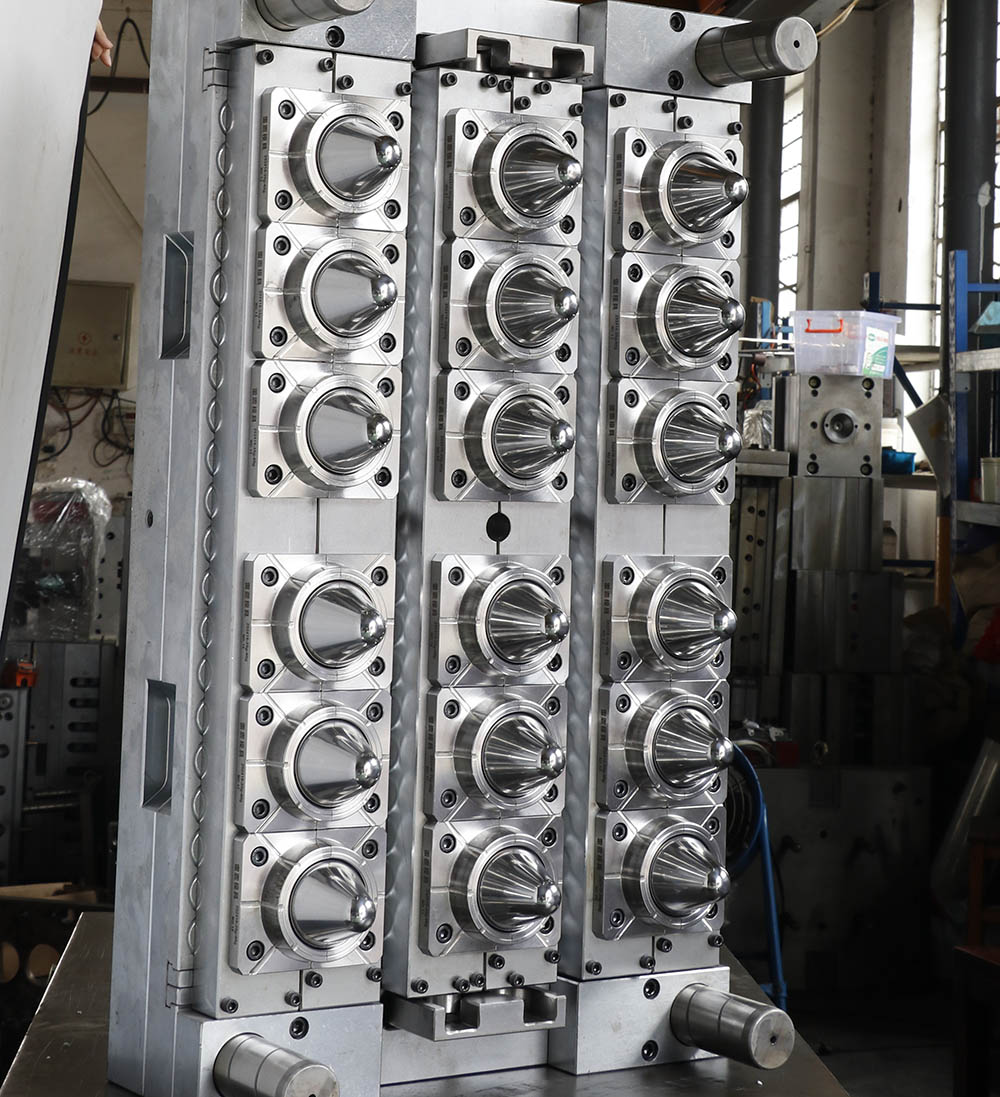

Wide-Neck and Easy-Open Can PET Preform Molds: Design and Processing Challenges
Expert technical analysis of wide-neck and easy-open can PET preform mold design and processing challenges. Debodi Mould delivers precision solutions for neck finishes up to 150mm and cavity counts 1-9...


The rise of PET easy-open cans and wide-mouth packaging has created a distinct set of tooling challenges that separate wide-neck preform molds from conventional narrow-neck beverage preform molds. While the fundamental injection stretch blow molding (ISBM) process remains the same, the geometry of a wide-neck preform fundamentally alters heat distribution, core deflection behavior, thread integrity, and blow nozzle sealing dynamics. This analysis examines the critical design and processing variables that determine success or failure in wide-neck and easy-open can preform tooling.
1. What Defines a Wide-Neck Preform for Easy-Open Can Applications
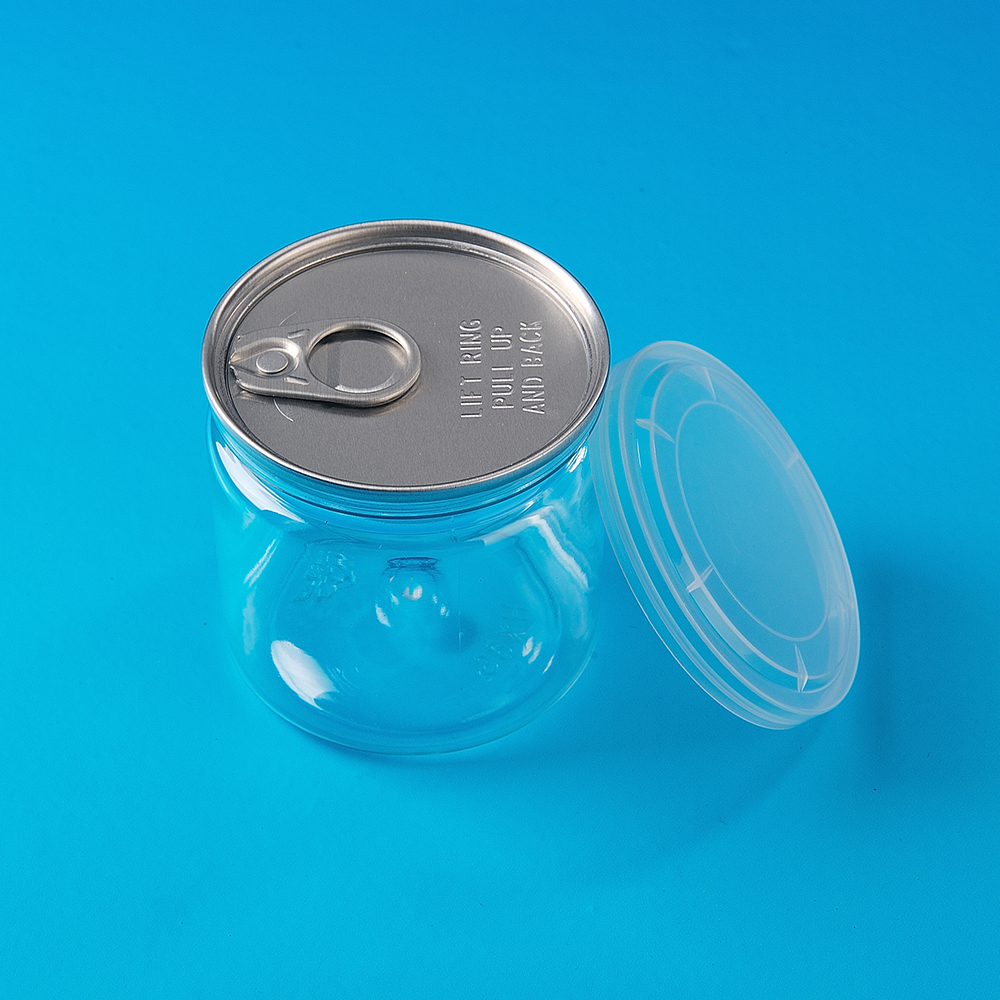
Wide-mouth PET containers typically feature neck finishes exceeding 48mm in diameter, with some can-style applications reaching 63mm, 80mm, or beyond. The easy-open end (EOE) integration introduces an additional constraint: the neck finish must accommodate a seamed or bonded lid interface rather than a simple threaded closure. This means the critical dimensions shift from thread engagement to sealing surface flatness, concentricity, and resistance to ovalization during both injection and blow molding.
Patent literature describes wide-neck preforms with pour opening diameters ranging from approximately 35mm to 95mm, where the inner diameter of the neck section exceeds the inner diameter of the preform body—a geometry that creates a natural transition zone useful for blow nozzle sealing but problematic for core pin rigidity [citation:2][citation:10].
2. Core Pin Deflection: The Silent Killer of Wide-Neck Mold Precision
In a conventional 28mm or 30mm neck preform, the core pin is a slender steel rod that maintains concentricity under injection pressure with predictable deflection. In a 63mm or 80mm neck preform, the core pin diameter increases substantially, but so does the unsupported length required to form the neck finish and sealing geometry. The result is a core pin with a diameter-to-length ratio that is less favorable for deflection resistance than many molders anticipate.
During injection, melt pressure of 80–120 MPa acts on the core pin’s unsupported span. Even micron-level deflection produces wall thickness variation that may pass visual inspection but fail at the blow molding stage. Wide-neck preforms are particularly unforgiving because the neck region is not blown—whatever dimensional error exists in the injected neck carries directly into the finished can. Thread or sealing surface distortion cannot be corrected downstream.
Design Countermeasures Debodi Applies:
- Core pin support geometry: Additional support collars or tapered core profiles that reduce unsupported span without interfering with ejection.
- Cooling circuit asymmetry: Deliberate thermal balancing to counteract predictable deflection patterns observed in mold flow simulation.
- Gate location optimization: Off-center gating for certain wide-neck geometries to balance fill pressure around the core.
3. Thermal Management: Why Wide-Neck Preforms Cool Differently
A 28g narrow-neck preform for a 500ml water bottle has a body wall thickness of roughly 3–4mm and a neck wall of 2–3mm. A wide-neck preform for an easy-open can, by contrast, may have a neck wall of 4–6mm to accommodate the EOE seaming geometry, while the body wall remains in the 3–5mm range. The thermal mass differential between neck and body is therefore much smaller in absolute terms but much larger in proportion relative to the part’s total heat content.
More critically, the larger core diameter means heat cannot escape as efficiently through the core side. Cooling time for wide-neck preforms is typically 20–35% longer than comparable-weight narrow-neck preforms, and the differential cooling between neck ID and OD creates a shrinkage gradient that manifests as:
- Ovality of the sealing surface (critical for EOE lid application)
- Internal stress concentration at the neck-body transition
- Thread or snap-fit feature distortion when the preform is reheated for blow molding
Debodi’s mold designs for wide-neck applications incorporate independent neck cooling circuits with turbulent flow promoters (baffles or bubbler tubes) to achieve uniform heat extraction from the larger core surface area, rather than relying on the body cooling circuit to carry the neck thermal load.
| Parameter | Narrow-Neck (28–30mm) | Wide-Neck (63–80mm) |
|---|---|---|
| Typical neck wall thickness | 2.0–3.0 mm | 3.5–6.0 mm |
| Core cooling challenge | Moderate | High (larger thermal mass) |
| Ovality risk at sealing surface | Low | High |
| Blow nozzle sealing interface | External (support ring) | Internal (conical transition) preferred |
| Typical cycle time penalty | Baseline | +20–35% |
4. The Blow Nozzle Sealing Problem in Wide-Mouth Preforms
This is where wide-neck design becomes genuinely difficult. In conventional narrow-neck blow molding, the blow nozzle seals against the top face of the neck finish or the support ring. The nozzle diameter is small, the sealing force is manageable, and the thread region is untouched.
For wide-mouth preforms, the sealing face area scales with the square of the diameter. A 63mm neck has roughly 5x the sealing area of a 28mm neck. To achieve reliable sealing at blow pressures of 20–40 bar, the required clamping force becomes substantial—and any non-uniformity in the sealing surface (from the shrinkage issues described above) creates leak paths.
Patent literature reveals an elegant solution that Debodi has incorporated into wide-neck tooling designs: internal sealing against a conical transition surface within the preform neck, rather than external sealing against the rim [citation:2][citation:7]. The blow nozzle enters the preform and its outer edge contacts a machined conical surface between the neck ID and body ID. This approach offers several advantages:
- The sealing diameter is smaller than the external neck diameter, reducing required force.
- Thread or EOE-interface geometry on the outside of the neck is never touched by tooling.
- The conical surface can be inspected for witness marks to verify proper nozzle alignment.
However, this design demands that the preform mold’s core pin produce a precisely machined conical transition with surface finish and dimensional tolerance that conventional preform cores do not require. Debodi’s manufacturing process for these cores includes dedicated CNC finishing passes and in-process inspection to ensure the cone angle and concentricity meet blow molding requirements.
5. Easy-Open Can Specific Requirements: Beyond Standard Wide-Mouth
Easy-open can PET packaging introduces requirements that differ from wide-mouth jars or containers with screw caps. The EOE is typically seamed or ultrasonically bonded to the neck finish, meaning the neck top surface must be:
- Flat within 0.05mm across the full sealing circumference
- Free of gate vestige or weld line at the sealing interface
- Dimensionally stable through the blow molding thermal cycle (the neck is shielded from IR heat, but conduction from the body can still cause relaxation)
These requirements place the burden squarely on the injection mold’s ability to produce a neck finish that is thermally and mechanically stable in its as-molded state. Unlike threaded necks that can tolerate minor dimensional variation because the closure thread engagement is forgiving, an EOE seaming operation has almost no compliance.
Debodi’s approach for EOE-compatible preform molds includes:
- Stress-relief annealing protocols for preforms destined for easy-open can applications, reducing residual stress that could cause post-mold distortion.
- Gate placement outside the sealing zone, often with a hot runner valve gate system to eliminate vestige entirely.
- Enhanced neck cooling with independent temperature control zones to minimize differential shrinkage between the sealing surface and the thread/retention features below it.
6. Cavity Count vs. Neck Diameter: The Productivity Trade-Off
Debodi manufactures preform molds from 1 to 96 cavities [citation:1]. For narrow-neck water bottle preforms, 48- or 64-cavity tools are routine. For wide-neck easy-open can preforms, the practical cavity count drops dramatically due to:
- Injection platen size: A 63mm neck preform requires a mold base with significantly larger spacing between cavities.
- Clamp tonnage per cavity: The projected area of the preform body plus neck finish determines clamp force. Wide-neck preforms consume 3–5x the clamp tonnage per cavity compared to narrow-neck equivalents.
- Core cooling complexity: Each wide-neck core requires more cooling circuit connections, consuming manifold space within the mold base.
In practice, wide-neck preform molds for EOE applications typically range from 8 to 24 cavities in high-volume production settings, with smaller cavity counts (1–8) common for specialty or low-volume can formats. Debodi’s mold design team works with customers to balance cavity count against press availability and cycle time targets, rather than defaulting to the highest cavity count the mold base can physically accommodate.
Need a Wide-Neck or Easy-Open Can Preform Mold Solution?
Debodi Mould provides free 3D preform design review, mold flow analysis, and cavity-count optimization for wide-neck PET applications. Neck sizes up to 150mm. Cavity counts 1–96.
Contact Debodi Mould — your PET preform mold solution expert.
7. Material and Processing Considerations Unique to Wide-Neck Preforms
Wide-neck preforms for easy-open cans are often produced from PET with higher intrinsic viscosity (IV) than standard bottle-grade resin, or with chain extenders, to compensate for the lower stretch ratios achievable when the neck diameter is large. The blow molding stretch ratio for a wide-mouth can is typically 2.5–3.5x in the hoop direction, compared to 4–5x for a narrow-neck bottle [citation:12]. Lower stretch means less strain-induced crystallization, which must be compensated by:
- Higher preform temperature during blow (often 100–115°C vs. 90–105°C for narrow-neck)
- More precise heat profiling along the preform body
- Slower stretch rod speed to allow molecular orientation without fracture
From the mold maker’s perspective, this means the preform’s body wall thickness distribution becomes even more critical. A thick spot that cools slowly will remain amorphous and may not stretch uniformly; a thin spot will over-stretch and stress-whiten. Debodi’s CAE-driven wall thickness optimization for wide-neck preforms accounts for the lower stretch ratios and altered temperature profiles that EOE applications require.
Conclusion: Wide-Neck Tooling Demands Specialized Experience
A mold shop that excels at 28mm water bottle preforms is not automatically qualified to build wide-neck easy-open can tooling. The differences in core deflection behavior, thermal management, sealing surface integrity, and blow nozzle interface design are substantial. Debodi Mould’s experience across neck sizes from 12mm to 150mm and cavity counts from 1 to 96 provides the production data and design intuition required to navigate these challenges without extended trial-and-error cycles [citation:1][citation:5].
For packaging engineers and brand owners evaluating PET easy-open can formats, the preform mold is not a commodity component—it is the tool that determines whether the sealing surface will hold, whether the blow molding window is wide enough for production tolerances, and whether the cavity count can meet volume targets at an acceptable cycle time. Engaging a mold partner with specific wide-neck experience shortens the path from concept to qualified production.
Tags
About the author

Peter Du
Content ManagerContact our PET preform mold specialists today and get customized solutions for your bottle packaging production needs.
Behind every successful mold project is a dedicated DEBODI team committed to quality, precision, and long-term customer support.