

Blog



Case Study: Custom High-Cavity PET Preform Mold for an International Beverage Bottling Plant
Debodi Mould case study: engineering a custom high-cavity PET preform mold for an international beverage bottling plant. Technical deep dive into hot runner balance, cooling optimization, and cavity-to...


Executive Summary
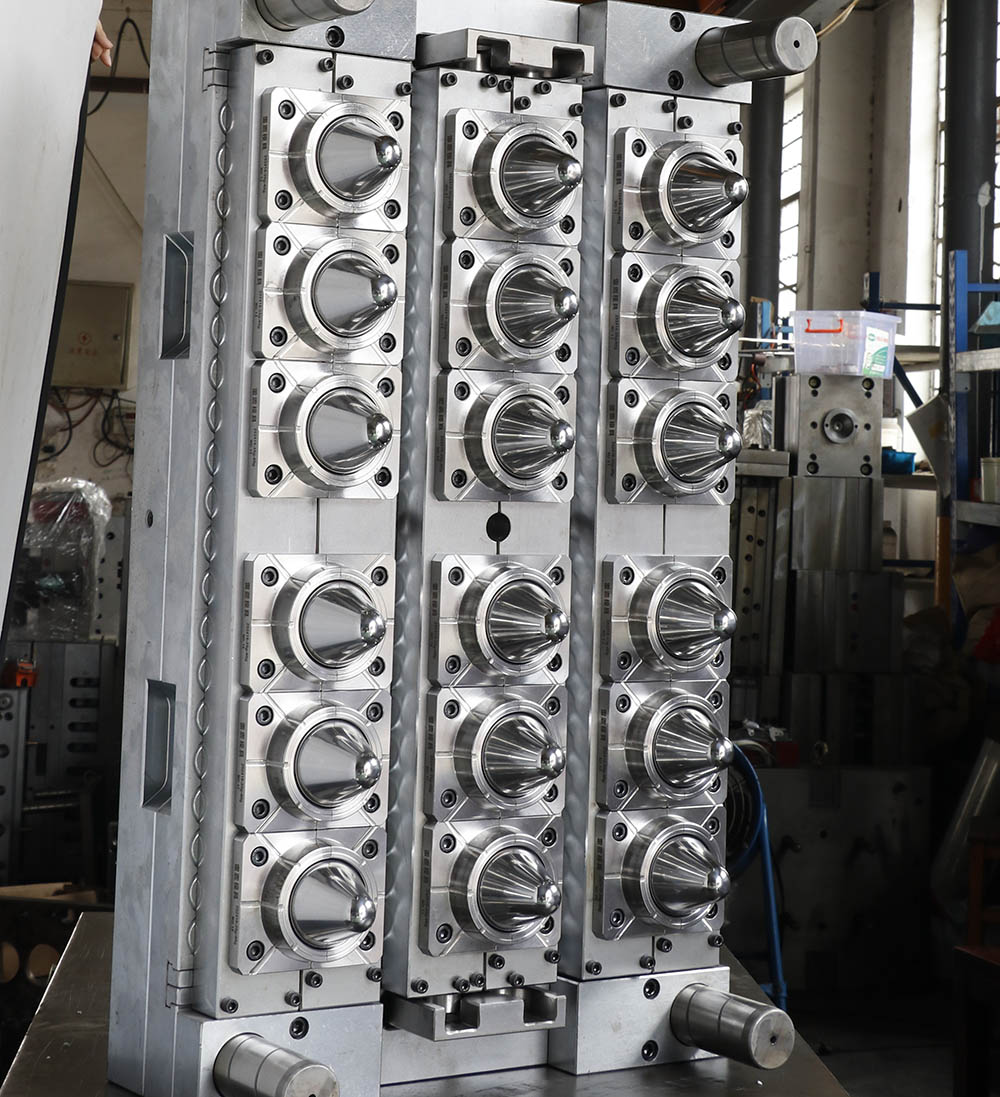
When an international beverage bottling plant operating across multiple Southeast Asian markets approached Debodi Mould, the objective was deceptively straightforward: replace an aging 48-cavity preform tooling system with a high-cavity mold capable of matching the output of two existing injection molding lines without sacrificing preform dimensional stability. The underlying challenge, however, involved a convergence of constraints that typically expose the limits of general-purpose mold manufacturing: a fixed platen footprint, strict neck-finish tolerances dictated by the client’s existing capping lines, and a mandated cycle time ceiling that left virtually no margin for cooling inefficiency.
This case study documents the engineering decisions, manufacturing controls, and validation outcomes behind the delivery of a custom 72-cavity PET preform mold designed specifically for carbonated soft drink (CSD) and mineral water preforms. The project illustrates how Debodi Mould’s approach to hot runner balance, cooling circuit architecture, and cavity-to-cavity consistency transforms a high-cavity mold from a simple multiplier of output into a stable, repeatable production asset.
1. Project Background and Client Requirements
The client is a contract bottler supplying major beverage brands across Southeast Asia. Their facility operates Husky and Netstal injection molding platforms, and the new mold needed to integrate with an existing Husky HYPET platform without requiring platen modification or hot half replacement beyond the standard interface.
The legacy 48-cavity mold had reached the end of its economical service life. Maintenance intervals had shortened from quarterly to monthly, and cavity-to-cavity weight variation had drifted beyond ±0.15 grams—a threshold that directly impacted downstream blow molding stability and bottle wall thickness distribution.
Key Technical Specifications
- Target cavity count: 72 cavities (maximum feasible within the existing 400-ton machine’s platen dimensions while maintaining adequate clamp force margin)
- Preform application: 500ml CSD and 600ml mineral water, 28mm PCO 1881 neck finish
- Preform weight targets: 22.5g ±0.10g (CSD) and 14.8g ±0.08g (water)
- Cycle time ceiling: 9.8 seconds (dry cycle basis, referenced to PET grade with 0.80 dL/g IV)
- Neck finish tolerance: ±0.03mm on critical sealing dimensions to match existing cap application equipment
- Expected service life: Minimum 1.5 million cycles before major refurbishment
Engineering Note: The cavity count decision was not driven by a desire for maximum output. The client’s 400-ton machine imposed a practical ceiling: pushing beyond 72 cavities would have required a mold footprint that encroached on tie-bar clearance and reduced the safety margin on clamp tonnage. Debodi Mould’s design team confirmed through mold flow analysis that 72 cavities represented the optimal balance between output per shot and reliable operation within the existing machine envelope—a principle consistent with industry guidance that cavity count must be matched to available closing force and platen dimensions rather than pursued as an abstract maximum[citation:7].
2. Engineering Challenge: Hot Runner Balance at 72 Cavities
In high-cavity PET preform tooling, the hot runner system is the single most consequential determinant of success or failure. An imbalanced hot runner manifests as cavity-to-cavity weight variation, inconsistent acetaldehyde (AA) generation, and differential shrinkage that compromises neck finish roundness. For a 72-cavity layout, the melt delivery path from the machine nozzle to the furthest cavity must be engineered so that every cavity fills under identical pressure and temperature conditions.
2.1 Melt Delivery Architecture
Debodi Mould implemented a valve-gate hot runner system with a balanced 6-level manifold tree, distributing melt from a single central inlet to six secondary manifolds, each feeding 12 cavities. This architecture, while more complex than a simple 2-level split, was selected after thermal simulation revealed that a conventional 4-level layout would produce unacceptable temperature gradients in the outer cavity ring under the client’s specified cycle time.
The manifold channels were designed with symmetric flow lengths and identical shear histories for every cavity. Each nozzle tip was individually temperature-controlled via a zone-controlled heater circuit, allowing fine adjustment during trial and production to compensate for any residual thermal asymmetry.
2.2 Thermal Isolation and Gate Quality
PET’s sensitivity to shear and residence time makes gate design particularly critical. The valve pins were manufactured from a high-speed steel grade with a proprietary surface treatment to resist wear and prevent gate stringing—a defect that, in high-cavity tools, can escape detection until it causes downstream blow molding failures. The gate orifice diameter was specified at 2.2mm, a dimension validated through Moldflow simulation to deliver the required injection rate per cavity without exceeding the material’s permissible shear rate.
3. Cooling System Design: The Cycle Time Determinant
In PET preform injection molding, cooling accounts for approximately 50-60% of total cycle time. The client’s cycle time ceiling of 9.8 seconds left no room for a conservative cooling approach. Debodi Mould’s engineering team designed a conformal cooling circuit that deviated from the conventional straight-drilled channel layout in two specific areas: the preform body and the neck ring region.
3.1 Body Cooling Optimization
The preform body—where wall thickness ranges from 3.2mm at the gate to 2.6mm near the neck transition—requires uniform heat extraction to prevent differential shrinkage and internal stress. The cooling channels were positioned at a consistent 18mm from the cavity surface, with flow rate calculated to maintain turbulent flow (Reynolds number > 10,000) across all circuits. The inlet-to-outlet temperature differential was specified at ≤1.5°C across the entire mold, a tighter tolerance than the industry-typical 3°C, because the client’s lightweight water preform (14.8g) had minimal thermal mass and could not tolerate asymmetric cooling.
3.2 Neck Ring Cooling and Dimensional Stability
The 28mm PCO neck finish demands exceptional dimensional control. The neck ring inserts were equipped with dedicated cooling circuits independent of the main body cooling loop. This isolation allowed the neck ring temperature to be maintained at 8-10°C higher than the body, a deliberate strategy to improve material flow into the thread detail without over-cooling the thin thread roots. The result was a neck finish that consistently met the ±0.03mm tolerance without the need for post-mold gauging that would have added labor cost.
4. Steel Selection and Critical Component Manufacturing
For a mold expected to produce 1.5 million cycles with minimal maintenance, material selection was not a cost-optimization exercise. The cavity and core inserts were machined from DIN 1.2344 (H13) ESR-grade tool steel, heat-treated to 48-50 HRC. This grade was selected over the more commonly used S136 for its superior thermal fatigue resistance in continuous high-temperature cycling—a critical consideration given the client’s 24/7 production schedule.
The neck ring inserts, which experience the highest wear due to repeated opening and closing under pressure, were manufactured from a premium stainless steel grade with a hardness of 52-54 HRC and a mirror-polished surface finish (Ra ≤0.05µm). This specification was driven by the client’s use of a percentage of post-consumer recycled PET (rPET) in their water preform production, a material stream known to accelerate wear on mold surfaces due to variable viscosity and potential hard contaminants.
Debodi Manufacturing Control: Every critical insert was dimensionally inspected on a CMM after heat treatment and after final polishing. The inspection reports, including actual measurements against the 3D model, were compiled into a project quality dossier delivered with the mold. This level of traceability is standard practice at Debodi Mould and reflects our understanding that high-cavity preform molds are not commodities—they are precision instruments that must perform identically across all cavities for their entire service life[citation:1][citation:6].
5. Validation Results: From Trial to Production
The mold underwent a structured trial process at Debodi Mould’s facility before shipment. The client’s technical team reviewed trial videos and dimensional reports remotely before approving shipment, a workflow that reduced on-site commissioning time to three days.
5.1 Cavity-to-Cavity Consistency
The primary validation metric was preform weight distribution across all 72 cavities over a 2-hour continuous run. The results:
| Metric | Target | Actual Result |
|---|---|---|
| Preform weight (CSD, 22.5g nominal) | ±0.10g | ±0.06g (range across all cavities) |
| Preform weight (Water, 14.8g nominal) | ±0.08g | ±0.05g |
| Neck finish diameter (critical sealing dimension) | ±0.03mm | ±0.018mm |
| Wall thickness eccentricity (body section) | ≤0.04mm | ≤0.025mm |
| Cycle time (achieved, dry cycle basis) | ≤9.8s | 9.4s |
| AA level (acetaldehyde) | ≤3.0 µg/g | 2.2 µg/g (water preform) |
5.2 Production Ramp-Up
Following installation at the client’s facility, the mold achieved stable production within the first 48 hours. The client reported that scrap rate during the first week of production was below 0.3%, compared to 1.8% with the legacy 48-cavity mold during its final months of service. The improvement was attributed directly to the balanced hot runner and uniform cooling, which eliminated the random cavity-specific defects that had plagued the old tool.
6. Why This Project Matters: Debodi Mould’s Engineering Philosophy
This case study is representative of how Debodi Mould approaches every high-cavity preform mold project. The mold itself is the visible deliverable, but the underlying value lies in the engineering discipline applied before a single chip of steel is cut:
- Machine-matched cavity planning: We do not propose cavity counts based on catalog maximums. We calculate what the client’s specific injection molding machine, platen dimensions, and clamp tonnage can support reliably over millions of cycles.
- Simulation-validated thermal design: Hot runner balance and cooling circuits are modeled and iterated before manufacturing. This is why our molds achieve production-ready quality in a single trial—a claim that is only possible when the physics are resolved on screen, not on the shop floor[citation:1].
- Traceable quality at every stage: From steel certification to final dimensional inspection, every step is documented. Clients receive a complete quality dossier that serves as the baseline for future maintenance and refurbishment planning.
For beverage bottlers evaluating high-cavity preform tooling, the lesson from this project is clear: the difference between a mold that produces acceptable preforms and one that produces consistent, blow-molding-ready preforms at scale is not measured in cavity count alone. It is measured in the discipline of the engineering behind it.
Tags
About the author

Peter Du
Content ManagerContact our PET preform mold specialists today and get customized solutions for your bottle packaging production needs.
Behind every successful mold project is a dedicated DEBODI team committed to quality, precision, and long-term customer support.