

Blog


How Balanced Hot Runner Systems Improve PET Preform Consistency
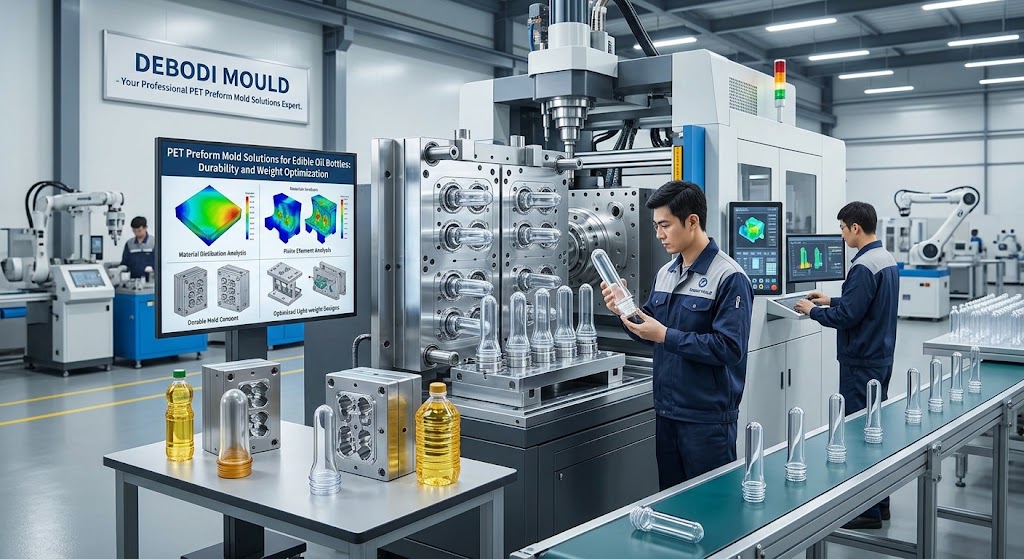
Deep technical analysis from Debodi Mould on how balanced hot runner systems ensure PET preform dimensional consistency, reduce AA levels, and optimize multi-cavity mold performance.


In the high-volume production of PET preforms, dimensional consistency is not merely a quality preference — it is a fundamental requirement for stable blow molding, lightweighting initiatives, and downstream filling line efficiency. At Debodi Mould, as a specialized PET preform mold manufacturing facility, we have observed that the single most influential factor governing cavity-to-cavity consistency in multi-cavity tools is the thermal and rheological balance of the hot runner system.
1. The Engineering Definition of “Balance” in PET Injection Molding
A “balanced hot runner system” in a PET preform mold refers to a melt delivery architecture where the polymer flow path from the machine nozzle to each individual mold gate presents equal shear stress, equal residence time, and equal pressure drop. In an unbalanced system, cavities closer to the injection point receive melt at higher pressure and shorter residence time than peripheral cavities. This disparity manifests as measurable weight variation, dimensional drift in the neck finish and body wall, and inconsistent acetaldehyde (AA) generation due to shear-induced degradation differences.
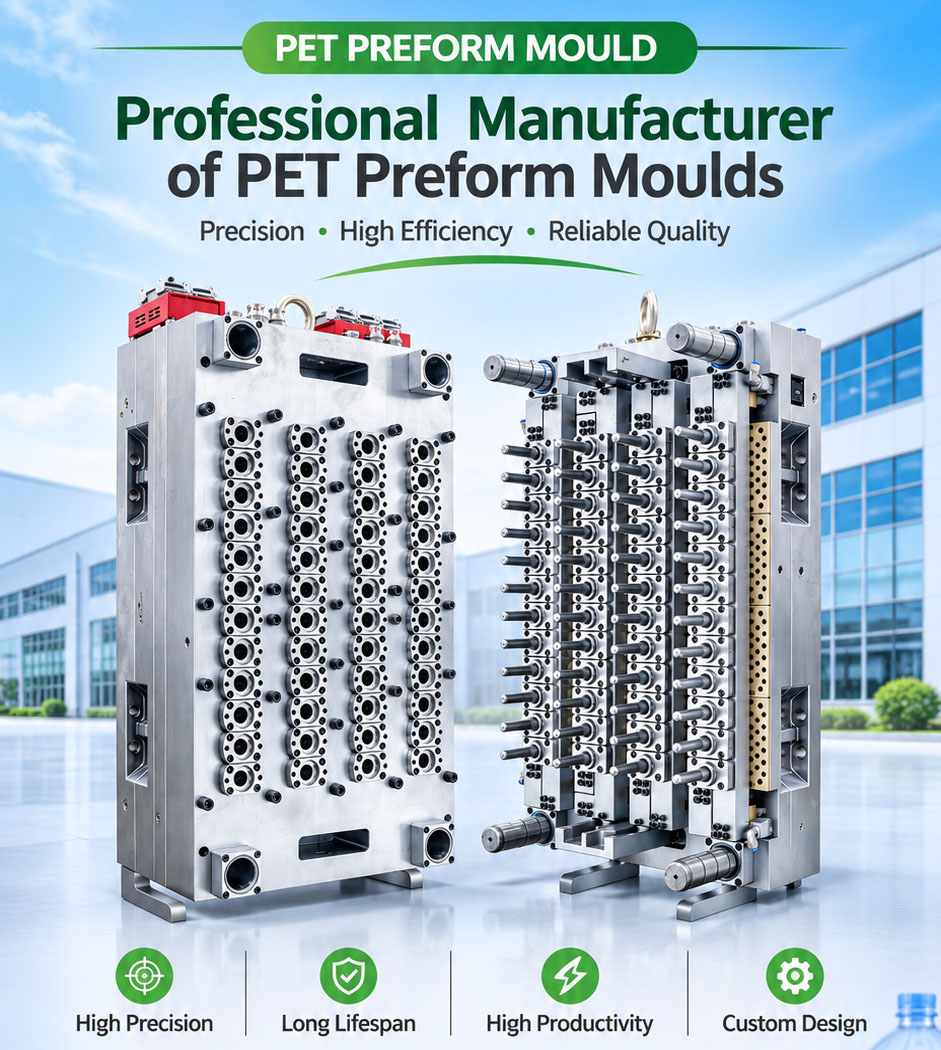
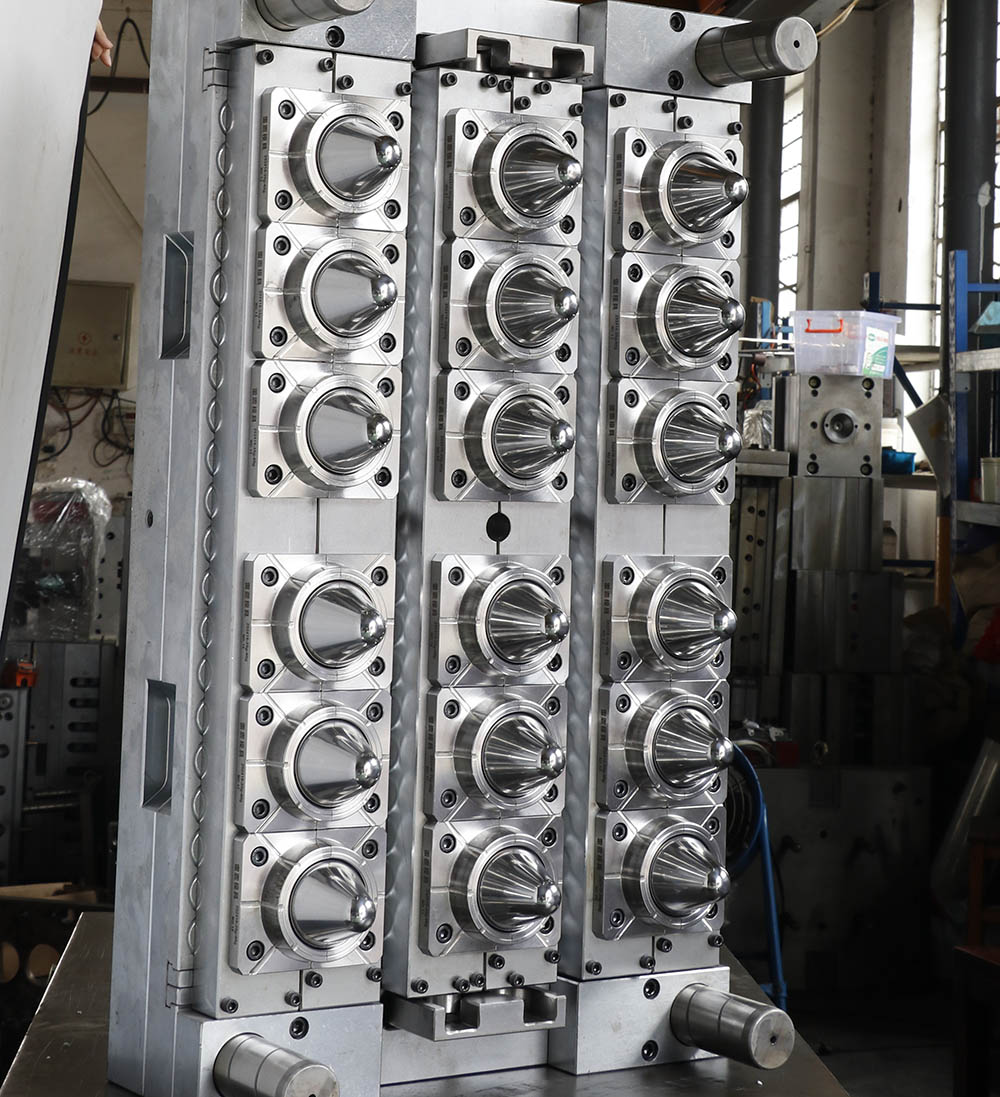
The challenge intensifies as cavity counts increase. A 48-cavity, 72-cavity, or 96-cavity preform mold demands that the hot runner manifold deliver melt with microscopic uniformity across a substantial thermal mass. Without deliberate balancing, the natural tendency is for inner cavities to run “heavy” and outer cavities to run “light,” forcing operators to compromise cycle time and part quality to achieve an acceptable average.
2. Rheological Balancing vs. Mechanical Balancing: A Critical Distinction
Traditional hot runner design often relied on purely mechanical balancing — symmetrical runner layouts with identical flow lengths. However, PET is a shear-thinning, thermally sensitive polymer. Its viscosity changes dramatically with temperature and shear rate. A geometrically symmetric manifold can still be rheologically imbalanced if the thermal profile is uneven or if shear histories diverge across the flow paths.
Advanced balancing approaches, such as those incorporating rheological balancing principles, account for the non-Newtonian behavior of PET melt along the entire flow path. This involves computational simulation of melt flow to optimize manifold channel diameters, bend radii, and thermal isolation. The result is a system where each cavity sees an effectively identical viscosity profile at the moment of injection.
3. The Direct Impact on Preform Consistency Metrics
3.1 Dimensional Stability and Weight Variation
Balanced hot runner systems directly reduce the standard deviation of preform weight across cavities. In an unbalanced 48-cavity tool, weight variation can exceed ±0.3 grams. A properly balanced system can compress this variation to below ±0.1 grams. For a 20-gram preform, this precision is critical: downstream blow molding assumes a predictable material distribution. Cavities that produce heavier preforms may blow into bottles with thicker bases and thinner sidewalls, while lighter cavities risk thin base sections and potential burst failures.
3.2 Acetaldehyde (AA) Control
AA is a thermal degradation byproduct of PET that affects taste and is strictly regulated for beverage applications. Unbalanced flow paths create localized hot spots and excessive shear, both of which accelerate AA formation. A balanced hot runner maintains uniform melt temperature and shear history across all cavities, ensuring consistent and minimal AA levels. The stability of AA content across cavities is a direct indicator of hot runner balance quality.
3.3 Intrinsic Viscosity (IV) Loss Minimization
IV loss during injection molding is influenced by residence time and thermal history. In an unbalanced system, peripheral cavities may experience longer residence times in the manifold, leading to higher IV loss. Balanced systems equalize residence time distribution, preserving the mechanical properties of the preform and ensuring bottle performance consistency.
4. Thermal Balance: The Often-Overlooked Complement
Flow balance and thermal balance are inseparable. A manifold can be perfectly flow-balanced by geometry yet still produce inconsistent preforms if the temperature distribution is uneven. Hot runner manifolds in high-cavitation PET tools require precise, zone-divided temperature control. Each nozzle tip must maintain its setpoint within ±1°C to preserve the gate freeze-off characteristics and prevent stringing or drooling.
At Debodi Mould, our hot runner systems incorporate independent cavity control that allows fine-tuning of nozzle temperatures. This capability is essential for optimizing balance in real production conditions, where ambient factors, machine variation, and material batch differences can shift the rheological equilibrium.
5. Valve Gate vs. Thermal Gate: Implications for Balance and Consistency
The gating mechanism itself interacts with balance. Valve gate (pin valve) systems offer positive shut-off, eliminating gate vestige and stringing while providing precise control over fill and pack. This is particularly important for preforms with demanding cosmetic requirements. However, valve gates introduce additional complexity in the hot runner — each valve pin actuator must be synchronized to avoid filling imbalances during the injection phase.
A balanced valve gate hot runner system ensures that all pins open and close with negligible timing variation. The result is a clean gate with no wire drawing, consistent gate vestige across all cavities, and uniform packing pressure.
6. Practical Design Considerations for High-Cavitation Preform Molds
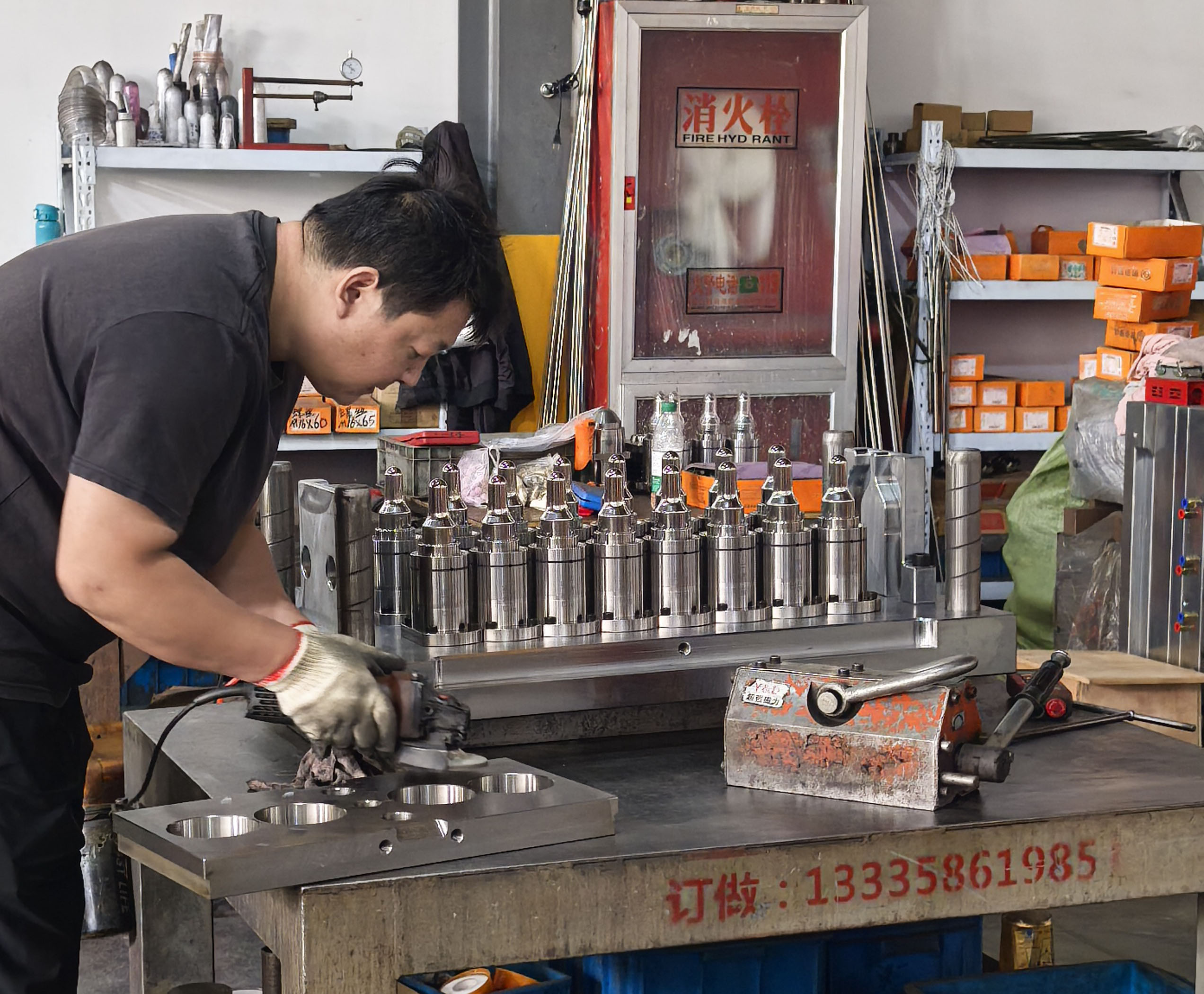
- Manifold Material and Machining Tolerance: The manifold block must be machined from high-quality tool steel with tight tolerances to ensure flow channel dimensions are exactly as designed.
- Heater Placement and Thermocouple Positioning: Thermal uniformity depends on strategic placement of heating elements and sensors. Multiple temperature zones allow compensation for heat loss at manifold extremities.
- Nozzle Tip Design: The nozzle tip serves as the final control point for melt delivery. Its thermal profile must be engineered to match the specific PET grade and gate geometry.
- Manifold Support and Thermal Expansion: The manifold expands under heat. A properly designed support system allows for expansion without inducing stress that could distort flow channels or cause leaks.
7. The ROI of Balance: Why Consistency Pays
The economic argument for balanced hot runners is straightforward. Reduced weight variation means less resin waste and tighter quality control. Consistent preforms reduce blow molding reject rates and enable lightweighting. Stable AA and IV values reduce the risk of customer complaints and product recalls. Longer maintenance intervals — a natural benefit of reduced shear stress and thermal degradation — lower operating costs.
For converters running high-cavitation tools, the difference between a balanced and unbalanced hot runner is often the difference between a profitable line and a perpetual troubleshooting exercise.
8. Debodi Mould: Your PET Preform Mold Solution Partner
As a dedicated PET preform mold manufacturer, Debodi Mould integrates hot runner design, manifold manufacturing, and mold testing under one roof. We do not treat the hot runner as a purchased component — it is a core engineering element of every mold we build. This vertical integration allows us to control the variables that matter most for preform consistency: flow path geometry, thermal management, and gate performance.
Whether you are developing a new lightweight preform, upgrading an existing tool for higher cavitation, or troubleshooting consistency issues on a current mold, our engineering team can provide the technical depth required to achieve measurable improvements in cavity-to-cavity uniformity.
Contact Debodi Mould to discuss your PET preform mold requirements and learn how our balanced hot runner technology can improve your production consistency.
Tags
About the author

Peter Du
Content ManagerContact our PET preform mold specialists today and get customized solutions for your bottle packaging production needs.
Behind every successful mold project is a dedicated DEBODI team committed to quality, precision, and long-term customer support.