




PET Preform Mould Tolerance Standards Explained for International Buyers
In the high-speed world of PET packaging manufacturing, precision dictates everything from bottle performance to production line efficiency. For international buyers, brand owners, and packaging plant managers, understanding PET preform mould tolerance standards is critical when investing in injection tooling. Even a micron-level deviation can lead to eccentric preforms, uneven wall thickness, capping failures, and costly downtime during the stretch blow molding process.
At Debodi Mould, we specialize in engineering high-performance, long-lasting PET preform molds designed to meet stringent international quality benchmarks. In this comprehensive technical guide, we break down the critical tolerance standards every global buyer should evaluate.
1. Why Precision Tolerances Matter in PET Preform Molds
A PET preform mould operates under extreme injection pressures and rapid thermal cycling. Tolerances refer to the allowable limit of variation in a physical dimension. In preform tooling, tight tolerances ensure:
- Weight Consistency: Precise cavity-to-cavity weight distribution, reducing material waste and ensuring consistent bottle burst strength.
- Interchangeability: Standardized replacement parts (cores, cavities, and neck rings) that can be swapped without manual fitting.
- Concentricity and Wall Thickness: Preventing uneven cooling and "leaned" preforms that warp during blow molding.
2. Critical Tolerance Parameters in Preform Tooling
A. Neck Finish Tolerances
The neck finish is the most critical interface on a preform because it determines cap sealing and closure compatibility (e.g., PCO 1810, PCO 1881, 29/25, 30/25, or 38mm standards). Key tolerance areas include:
- Thread Profile and Pitch Diameter: Typically machined to tolerances within ±0.01mm to ±0.015mm to guarantee leak-proof sealing with standard closures.
- Support Ledge Thickness: Strict control ensures the preform hangs correctly in the blow molding machine without slipping or jamming.
B. Core and Cavity Wall Thickness Tolerances
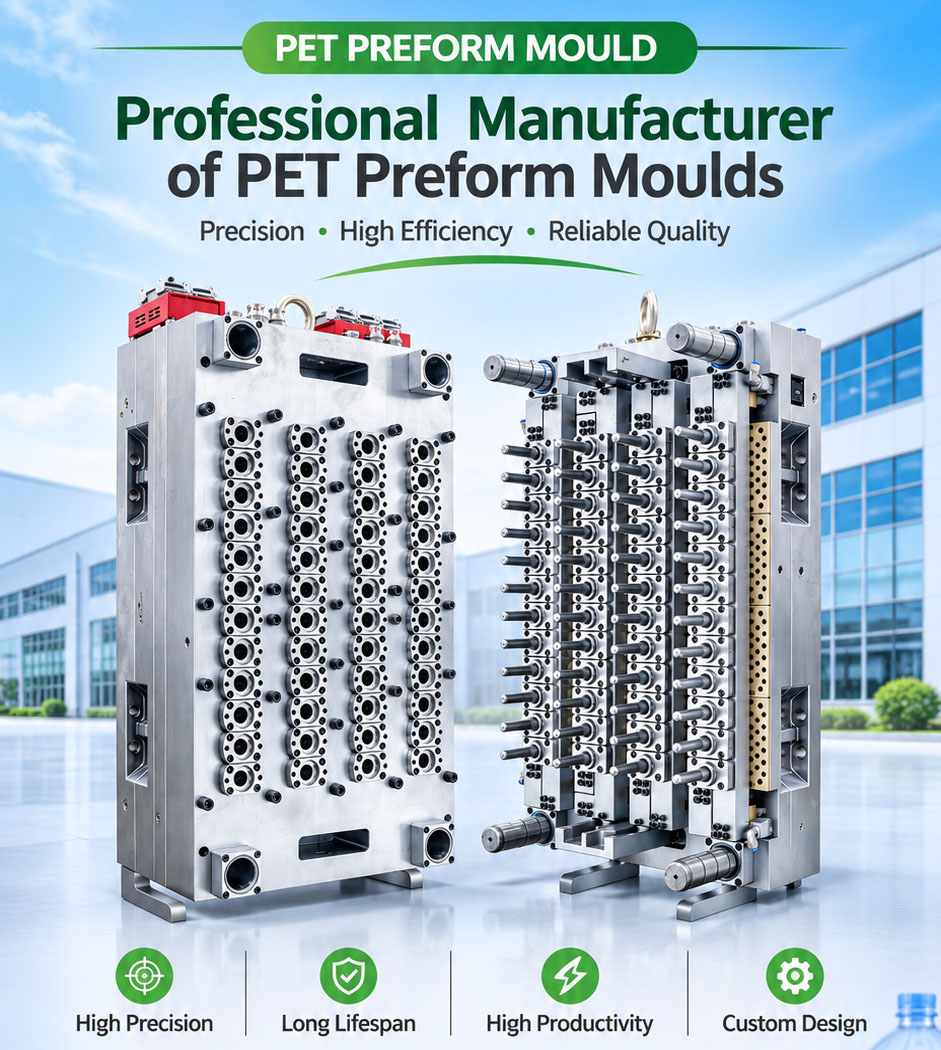
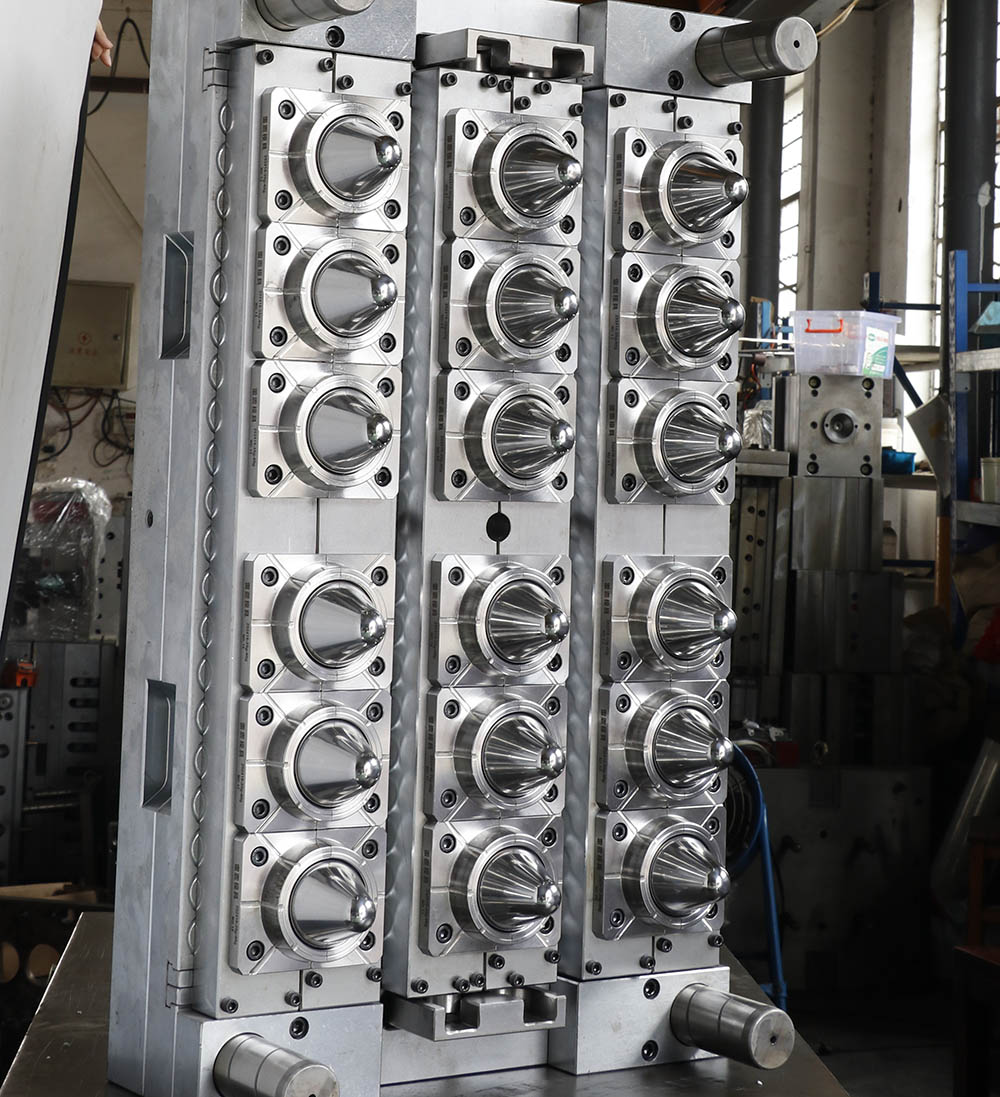
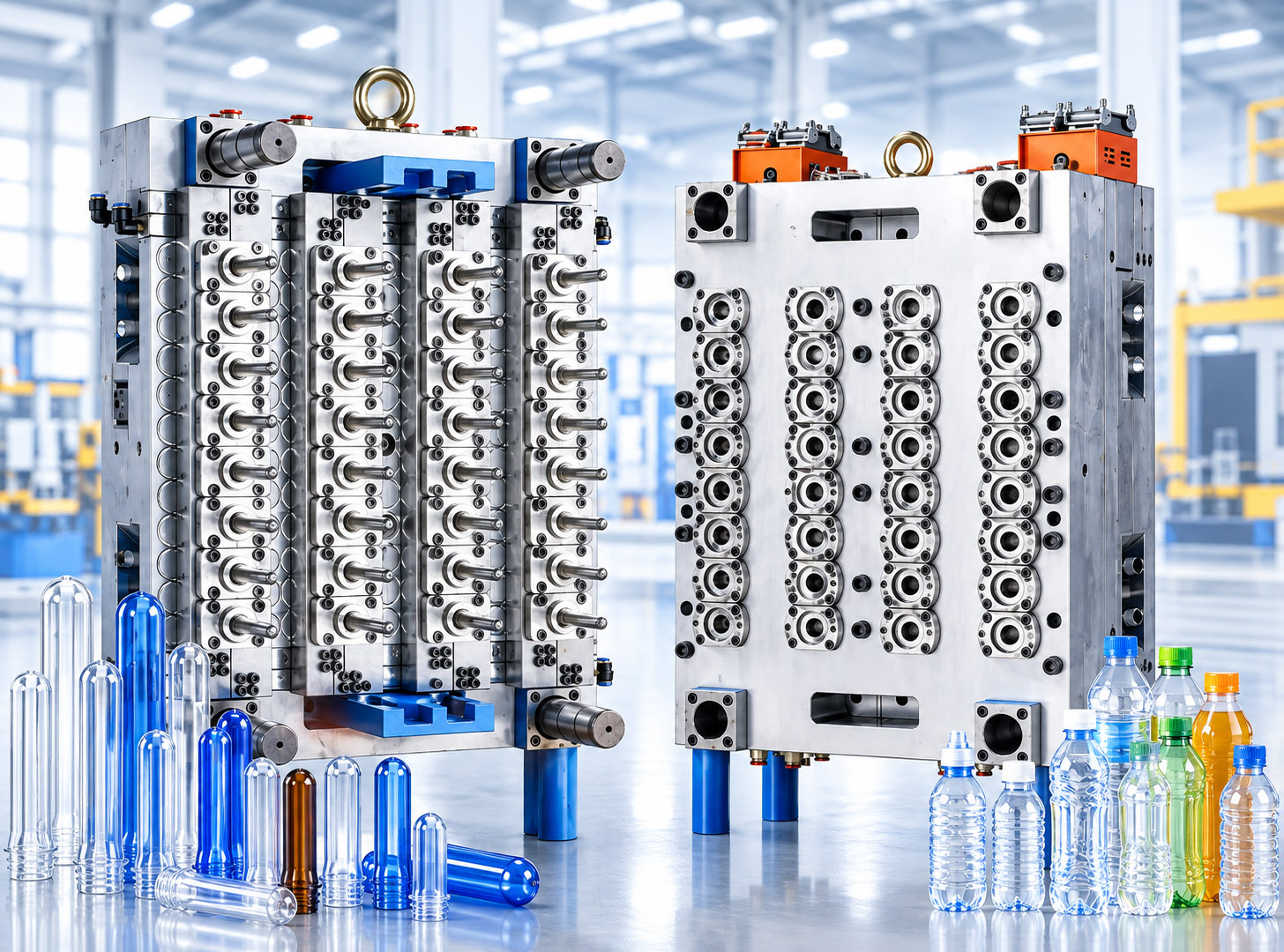
Wall thickness uniformity directly impacts the final bottle's mechanical properties. Eccentricity occurs when the core shifts relative to the cavity. At Debodi Mould, we maintain concentricity tolerances within ±0.02mm across multi-cavity systems (ranging from 16-cavity to 72-cavity molds). This precision is achieved through advanced high-speed CNC milling and high-precision EDM machining.
C. Valve Gate and Hot Runner Alignment Tolerances
Balanced material flow relies on precise alignment between the hot runner nozzle tips and the mold gate inserts. Positional tolerances are kept within ±0.005mm to eliminate stringing, gate vestige defects, and localized thermal degradation of the PET resin.
3. Material Selection and Dimensional Stability
Maintaining tight tolerances over millions of injection cycles requires superior metallurgy. Debodi Mould utilizes premium pre-hardened and stainless steels:
- Cavities and Cores: Imported Swedish S136 (AISI 420) stainless steel, heat-treated to HRC 48-52, ensuring high corrosion resistance against moisture and acetaldehyde (AA) formation, while maintaining dimensional stability.
- Mold Base: P20 or DIN 1.2311 high-grade steel for robust structural rigidity.
4. Advanced Quality Control at Debodi Mould
To ensure every mold export meets international standards, Debodi Mould implements a rigorous multi-stage inspection protocol using advanced 3D Coordinate Measuring Machines (CMM), optical profile projectors, and high-precision air gauges. Every critical dimension is verified before trial testing with actual PET resin.
Conclusion
Navigating international procurement requires partnering with a manufacturer that treats precision as a science, not a variable. As a trusted PET preform mold solution expert, Debodi Mould combines state-of-the-art CAD/CAM engineering, premium S136 steel, and strict tolerance control to deliver high-output, low-maintenance tooling for global beverage and packaging leaders.
Looking to optimize your next PET packaging project? Contact Debodi Mould today to discuss custom preform mold designs tailored to your specific neck finish and machine requirements.