

Blog


Valve Gate Hot Runner Design: Eliminating Gate Marks on PET Preforms
Deep technical analysis of valve gate hot runner design for eliminating gate marks on PET preforms. Debodi Mould shares expert insights on gate vestige control, valve pin engineering, and high-cavitati...


Why Gate Marks Matter More Than Most Molders Realize
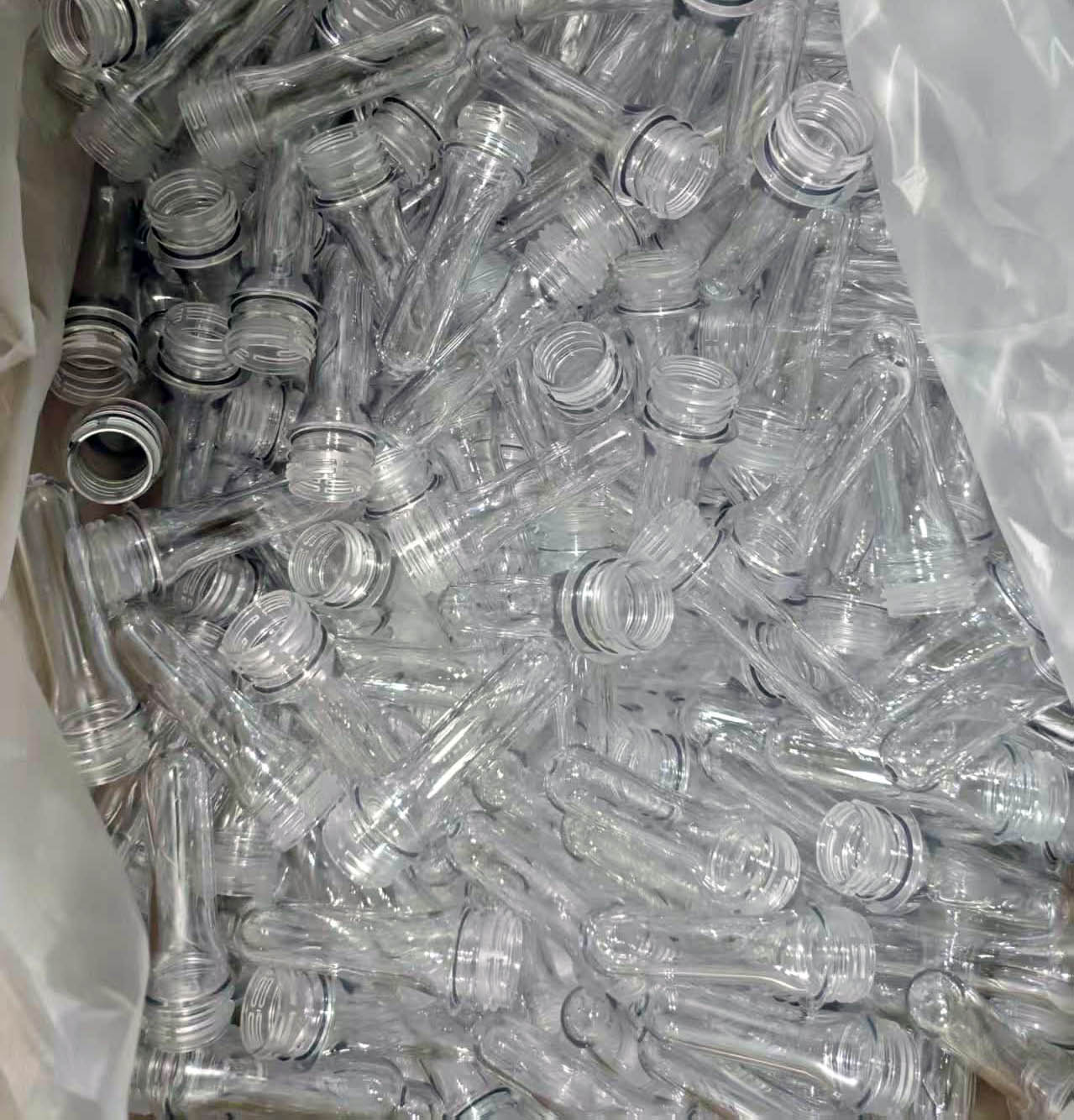
In PET preform injection molding, the gate is not merely a process necessity—it is a quality differentiator. The gate vestige left on the preform dome ultimately becomes the bottom of the blow-molded bottle. For carbonated soft drinks, the bottle base is a pressure-bearing structure. For edible oil or premium cosmetics, the base is a visible brand surface. A protruding, discolored, or crystalline gate mark compromises both structural integrity and shelf appeal.
Traditional thermal gate (hot sprue) systems leave a residual vestige that often requires secondary trimming or, at minimum, generates an unacceptable cosmetic defect. The valve gate hot runner system addresses this at the source: the mechanical valve pin positively shuts off the melt flow, creating a clean, flush gate surface that requires no post-mold processing[citation:2].
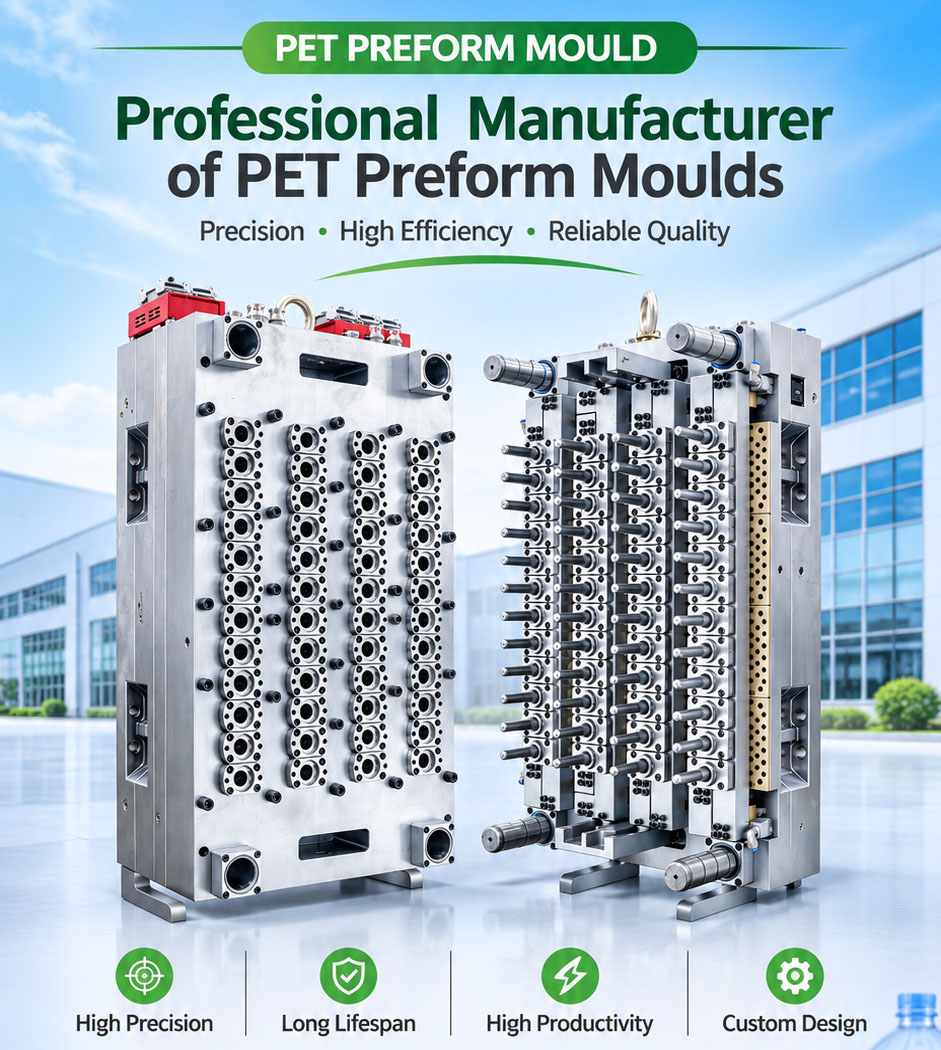
But achieving a truly mark-free gate in high-cavitation PET preform molds—particularly at 48, 64, or 72 cavities—demands far more than simply specifying a “valve gate” on the purchase order. It requires integrated design across four critical subsystems.
1. Valve Pin and Gate Seat Geometry: The Primary Control Variable
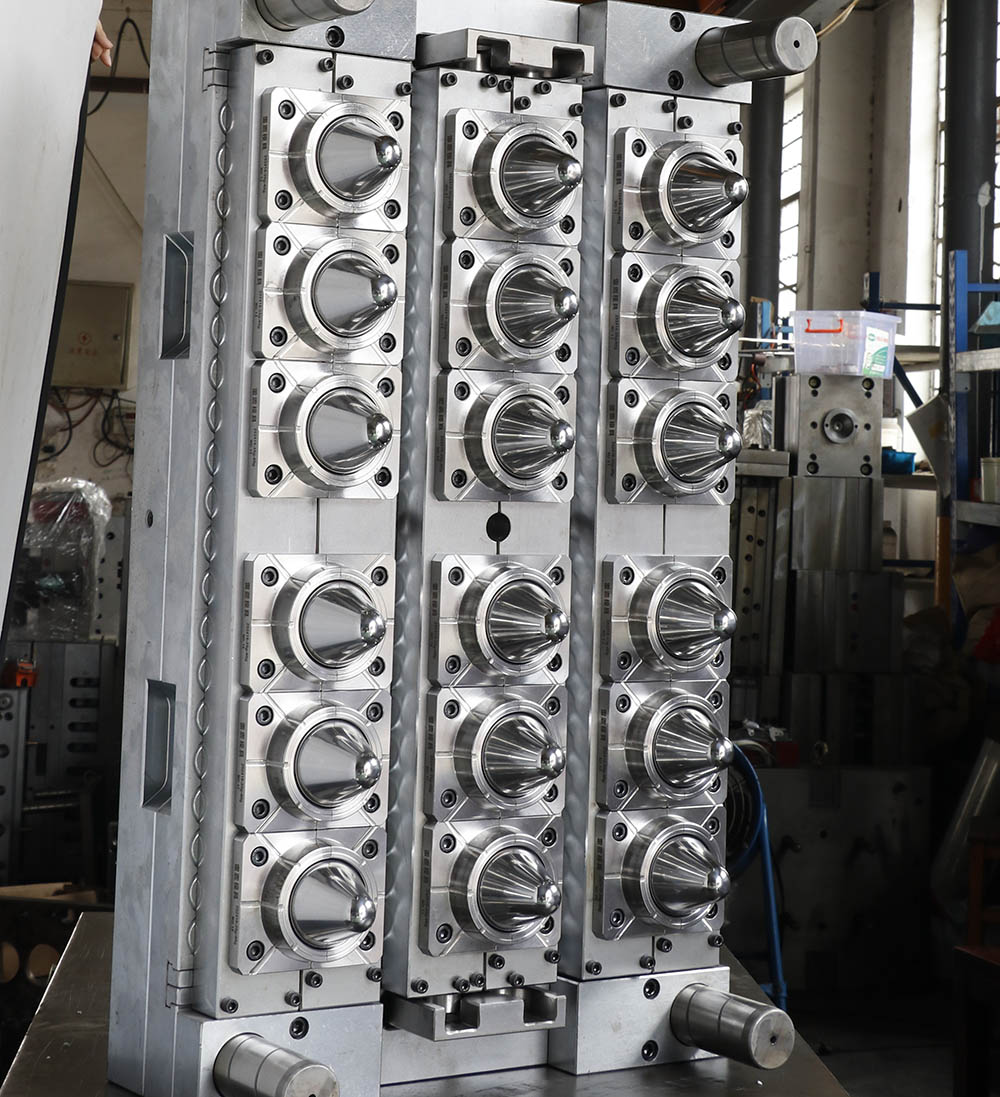
The valve pin tip and the gate orifice form a precision-matched pair. Any mismatch introduces gate vestige variability. In Debodi Mould’s needle valve preform molds, the valve pin is manufactured to sub-micron concentricity tolerances, and the gate insert is machined with a dedicated gate land geometry that promotes clean shear of the melt stream as the pin seats.
Three failure modes directly produce gate marks:
- Pin wear or damage: A worn pin tip fails to fully seal the gate orifice, allowing a melt “tail” to freeze. Mold Masters technical documentation identifies valve pin damage as a primary cause of long gate vestige and recommends routine inspection[citation:4].
- Oval or distorted gate hole: Thermal cycling and mechanical stress can deform the gate orifice, preventing uniform pin seating. Debodi’s gate inserts undergo post-machining stress relief and dimensional verification before assembly.
- Insufficient valve gate air pressure: If the pneumatic actuation pressure falls below the recommended range (typically 7.6–10 bar / 110–145 psi), the pin may not close completely or consistently, producing intermittent vestige defects[citation:4][citation:14].
Debodi Mould’s independently developed needle valve structure preform molds incorporate a self-locking mechanism that maintains pin seating force even under fluctuating shop air conditions, eliminating this common production headache[citation:13].
2. Thermal Management at the Gate: The Invisible Contributor
Gate mark formation is as much a thermal phenomenon as a mechanical one. If the gate area remains too hot after pin closure, the residual melt in the gate well continues to flow or stretch, creating a “pulled” or elongated vestige. Conversely, excessive cooling at the gate can cause the plastic to freeze before the pin fully seats, leaving a protrusion.
The gate insert material and cooling design are therefore critical. Patent literature describes gate inserts constructed from beryllium copper (BeCu) for its high thermal conductivity, allowing rapid heat extraction from the gate region during the cooling phase while maintaining adequate hardness for wear resistance[citation:3]. Debodi’s gate insert specification balances thermal conductivity with the wear demands of high-cavitation production, ensuring that the gate zone cools at a rate matched to the valve pin closure timing.
Equally important is the hot runner nozzle temperature stability. The heating coil must maintain the melt at precisely controlled viscosity throughout the cycle. Temperature drift at the nozzle tip alters the melt’s resistance to shear during pin closure, directly affecting vestige quality. Debodi’s dual heating and cooling system design for PET preform molds maintains nozzle temperature within a narrow band across extended production runs[citation:2].
3. Cooling Channel Optimization: Cycle Time vs. Gate Quality
There is an inherent tension in PET preform mold design between minimizing cycle time and maximizing gate quality. Aggressive cooling at the preform dome reduces cycle time but can freeze the gate before the valve pin has completed its stroke, trapping a frozen plug that tears when the mold opens. The result: a “peeled” or “pulled” gate vestige that is both cosmetic and functional defect.
Debodi addresses this through cavity-specific cooling channel layouts that prioritize gate zone thermal control independently of the main dome cooling circuit. Our engineers use CAE flow analysis to model the solidification front progression during the hold and cooling phases, ensuring that the gate freezes after the valve pin has fully seated and the melt pressure in the gate well has decayed.
Additionally, the decompression (pullback) stroke and timing are configured to relieve residual melt pressure in the gate well immediately after pin closure. Excessive hold pressure or insufficient pullback leaves high-pressure melt that forces its way past the closed pin, creating the very vestige the valve gate was intended to eliminate[citation:4].
4. High-Cavitation Consistency: The Real Production Test
A single-cavity mold can produce a perfect gate once. A 72-cavity preform mold must produce perfect gates on every cavity, every cycle, for millions of cycles. Cavity-to-cavity variation in valve pin stroke, gate insert temperature, and cooling flow distribution is the primary enemy of consistent gate quality in high-volume PET preform production.
Debodi Mould’s preform mold manufacturing process addresses this through:
- CNC machining of valve pin seats and gate inserts with position tolerance verification for every cavity position, not just a sampling[citation:1].
- Individual water circuit balancing to ensure that gate insert cooling flow rates are within specification across all cavities, preventing hot-spot cavities from producing vestige defects.
- Full-cavitation mold trials with gate vestige inspection documented per cavity, with video confirmation provided to the customer before shipment[citation:13].
This cavity-by-cavity discipline is what separates a preform mold that can run valve gates from one that reliably eliminates gate marks at production scale.
Debodi Mould: Engineering Gate-Mark-Free Preform Solutions
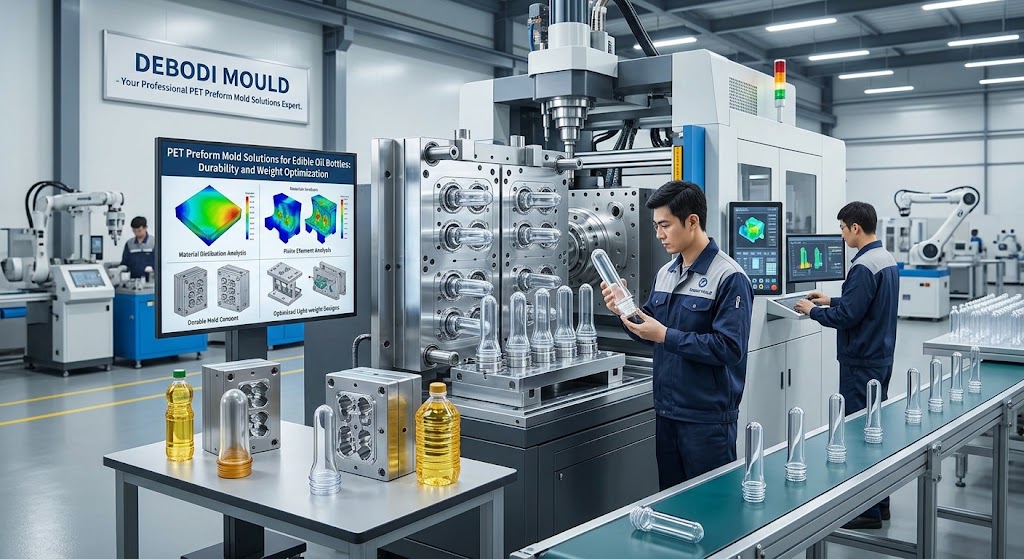
With preform weights from 6 grams to 720 grams and neck finishes from 12 mm to 150 mm, Debodi Mould has engineered valve gate hot runner solutions across the full PET packaging spectrum[citation:5]. Our in-house CAD/CAE/CAM workflow allows us to simulate gate freeze behavior and valve pin timing before cutting steel, reducing the trial-and-error cycle that plagues less integrated mold builders[citation:1].
For packaging converters and brand owners evaluating preform tooling, the question is not whether a mold has a valve gate—it is whether the valve gate system has been engineered as an integrated thermal-mechanical-control solution. Debodi Mould builds preform molds where the gate is invisible because the design made it so.
Technical Image: Valve Gate Hot Runner Design for PET Preforms
Visual concept: Cross-sectional diagram of a PET preform mold with valve gate hot runner system, showing valve pin in closed position seated against gate orifice, cooling channels at gate insert, and the resulting mark-free preform dome.
Image generation prompt: Technical cross-section illustration of a PET preform injection mold valve gate hot runner system, showing valve pin closed against gate seat, cooling channels, and smooth preform dome surface — industrial engineering diagram style, blue and steel tones, Debodi Mould branding
Tags
About the author

Peter Du
Content ManagerContact our PET preform mold specialists today and get customized solutions for your bottle packaging production needs.
Behind every successful mold project is a dedicated DEBODI team committed to quality, precision, and long-term customer support.